












According to a report by Persistence Market Research, construction and demolition waste management is projected to grow through 2033.
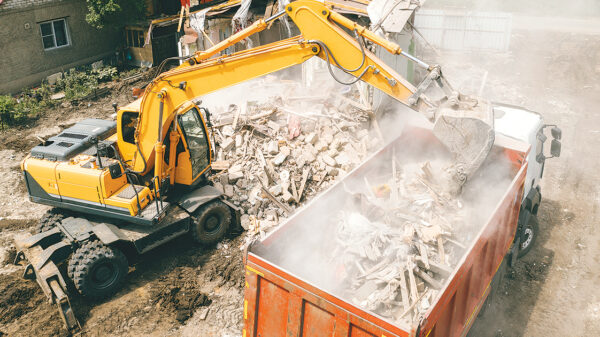
The global construction and demolition (C&D) waste management market size is expected to be valued at $227.4 billion in 2026 and projected to reach $322.1 billion by 2033, growing at a CAGR of 5.1 percent between 2026 and 2033. This sustained growth is anchored in accelerating global construction output, tightening landfill diversion mandates across developed markets, and the circular economy’s rising priority on secondary materials recovery from demolition streams.
The United Nations Environment Programme (UNEP) estimates that construction and demolition activities generate approximately 40 percent of global solid waste volumes, creating an enormous and structurally growing management challenge that governments, municipalities and private operators are compelled to address through invested infrastructure and policy frameworks, each of which directly expands the addressable TIC service base and contracted waste management revenue.
Drivers – Stringent Global Landfill Diversion Targets and Circular Economy Legislation Are Structurally Expanding Recycling and Processing Demand
For C&D waste management operators, the most consequential market signal is the progressive tightening of landfill diversion and material recovery targets by governments across Europe, North America, and Asia Pacific, a shift that is converting what were previously low-margin disposal contracts into higher-value processing and recycling service opportunities. The European Union’s Construction Products Regulation and Waste Framework Directive (2008/98/EC) set a binding target for 70 percent C&D waste recovery by weight across EU member states, and the recast EU Construction Products Regulation (2024) extends material passport requirements that effectively mandate traceability of recovered materials, rewarding operators with certified processing and secondary materials trading capabilities.
The U.S. EPA has identified C&D debris as one of the largest waste streams in the country, generating an estimated 600 million tons annually, and a growing number of U.S. states are adopting mandatory C&D recycling ordinances modeled on California’s CALGreen Building Code requirements. Operators who invest in advanced material recovery facilities (MRFs) targeting concrete, metal, and clean aggregate recovery streams are positioned to capture premium tipping fees and secondary commodity revenue simultaneously.
Accelerating Global Infrastructure Investment Cycles Are Generating Record-Volume C&D Waste Streams That Require Managed Disposal and Recovery
Infrastructure investment programs worldwide are simultaneously producing the raw feedstock of C&D waste management demand, demolition volumes from old stock clearance and construction waste from new build activity, at scales that are stretching the capacity of existing management infrastructure and rewarding operators who can deploy rapidly.
The U.S. Infrastructure Investment and Jobs Act (IIJA) committed $1.2 trillion to roads, bridges, transit and utilities, with significant demolition of aging structures preceding new construction, each generating C&D waste streams requiring permitted management. Across Asia, the Asian Development Bank (ADB) estimates the region requires $26 trillion in infrastructure investment through 2030, with demolition of inadequate existing stock in rapidly urbanizing cities generating C&D volumes at a pace that local waste management infrastructure has consistently struggled to absorb.
Restraints – Contamination of Mixed C&D Waste Streams Suppresses Recycling Yields and Undermines Secondary Material Economics
The structural challenge that constrains C&D waste recycling economics most severely is the inherent heterogeneity of demolition waste streams, which intermix concrete rubble, gypsum board, treated timber, asbestos-containing materials, and contaminated soil in proportions that vary dramatically by project type, age of demolished structure, and contractor sorting discipline at source.
The European Environment Agency (EEA) has documented that contamination rates in mixed C&D streams can reduce recyclable material yield by 30–50 percent, requiring costly sorting, pre-treatment, and in some cases specialized disposal that eliminates the margin advantage of recycling over landfill. For operators without the ability to enforce source-separation at demolition sites, a capability that requires contractual leverage and trained site supervision, mixed stream contamination directly suppresses processing facility throughput and secondary material quality, making it difficult to compete for premium recycled aggregate and metal sales contracts that underpin recycling-led business models.
Regulatory Fragmentation Across Jurisdictions Creates Compliance Complexity That Favors Large Operators and Disadvantages New Entrants
C&D waste management operates under a patchwork of national, regional, and municipal regulations governing permitted disposal sites, material classification, hazardous waste handling, transport manifests, and recycling credit accounting, a complexity that imposes disproportionate compliance costs on smaller operators and new market entrants seeking multi-jurisdictional scale. In the European Union, while the Waste Framework Directive sets the top-level framework, implementation varies materially across 27 member states in areas including end-of-waste criteria for recycled aggregates, treatment standards for hazardous C&D materials, and extended producer responsibility for construction products, each requiring separate permitting, reporting systems, and specialist legal counsel.
The practical consequence for market entrants is that establishing a compliant, multi-site C&D waste processing and disposal operation in a new European country typically requires 12–24 months of regulatory engagement before the first tonne of commercial waste can be accepted, creating a durable competitive moat for established licensed operators.
Opportunities – Processing & Recycling Service Segment Offers the Highest-Margin, Fastest-Growing Revenue Opportunity as Secondary Materials Command Premium Pricing
The processing and recycling segment is the fastest-growing service type in the C&D waste management market, and the most strategically consequential opportunity for operators willing to invest in advanced material recovery capabilities. Recycled concrete aggregate (RCA) now commands consistent commercial pricing in markets with strong circular procurement mandates, the UK Government’s Construction Playbook and Dutch SBK Environmental Performance Database both specify recycled content requirements for public infrastructure contracts, and recovered steel from demolition routinely achieves scrap market pricing that partially offsets processing costs.
The Ellen MacArthur Foundation’s circular economy analysis estimates that recovering materials from C&D waste streams at the rate technically achievable could save $100 billion annually in material input costs globally, providing a compelling economic case that procurement departments at major construction companies are increasingly acting on.
Middle East & Africa’s Construction Expansion Is Creating the Fastest-Growing Regional Demand Base, With Greenfield C&D Waste Infrastructure Opportunity
The Middle East & Africa region is poised to be the fastest-growing C&D waste management market globally, and the opportunity is particularly acute because the region is building modern waste management infrastructure largely from a low baseline, meaning first-movers can establish long-term asset positions before competitive density increases. Saudi Arabia’s Vision 2030 programme and the National Waste Management Center (NWMC) have explicitly prioritized C&D waste diversion as a national environmental target, committing to 100 percent diversion of inert C&D waste from landfill in new mega-project contracts for developments including NEOM and the Red Sea Project. The UAE’s Ministry of Climate Change and Environment mandates 75 percent C&D waste recycling on all major construction and demolition projects under its Green Building Codes, backed by municipal inspection and penalty enforcement frameworks in Dubai and Abu Dhabi.
Published July 2026