
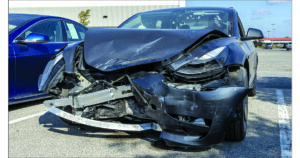
Today’s vehicles contain circuit boards, rare earth elements, lithium batteries and advanced electronics that introduce both new opportunities and new challenges for recyclers.
For decades, auto recycling followed a relatively simple formula – remove fluids, pull valuable components, crush the vehicle and recover the metals. But as vehicles have transformed into increasingly sophisticated machines filled with sensors, computers, displays and high-voltage battery systems, the process of recovering valuable materials has become far more complicated.
The modern automobile is no longer just a combination of steel, aluminum and mechanical parts. Today’s vehicles contain circuit boards, rare earth elements, lithium batteries and advanced electronics that introduce both new opportunities and new challenges for recyclers.
“The issue is time is money,” said Thomas Hogye, executive director of business development at PedalPoint Recycling. “Most cars are crushed flat, then sent through an auto shredder in the U.S. Disassembly to recover these materials in a clean state is very expensive here, hence most of the rare earths are very likely lost to smelter slags and shredder residues that are disposed of.”
Luke Oswald, automotive specialist at Wheels Away, agreed that the industry has undergone a significant transformation. “A shift was needed in how auto recyclers process materials,” he said. “Years ago, the primary focus was on metals such as steel and aluminum. With the increase in electronic units, displays and the sensors required to run advanced vehicle technology, there are now requirements for far more complex dismantling.”
According to Oswald, while the added complexity increases dismantling costs and introduces additional safety and waste management requirements, it also creates new revenue opportunities through the recovery of precious metals found within electronic components.
A more complex vehicle
The evolution of vehicles has dramatically changed the dismantling process. Decades ago, vehicles could be taken apart using basic hand tools. Today, advanced manufacturing techniques, plastics and integrated electronics have made vehicles more challenging to disassemble.
“In the ’60s you could literally take a car apart with a Phillips screwdriver and a few wrenches,” Hogye said. “Today’s automobiles are so complex, you can’t replace the spark plugs on your own.”
Modern vehicles incorporate extensive wiring systems, electronic control modules, displays and sensors throughout the vehicle. While some materials remain relatively straightforward to recover, others are hidden within complex assemblies.
Oswald noted that recovering those materials is becoming increasingly labor intensive because they are integrated into more sophisticated assemblies.
“These materials can’t be extracted using the large magnet that people often associate with vehicle recycling,” he said. “As vehicles have become more advanced and contain far more technology, these materials need to be carefully extracted from the individual units that contain them.”
He pointed to aluminum as one example. “A lot of the aluminum is very often attached to steel or composite components, often using adhesives, meaning it needs to be separated properly. This is more labor intensive, because the value is reduced if the aluminum is contaminated.”
Copper presents similar challenges. “A lot of the copper in vehicles is now located in the numerous complex electronic devices and units, and this requires significant dismantling to get the most value from the extraction,” Oswald said. “It’s a balance of the additional labor and, of course, looking to maximize the extracted value from each vehicle.”
The challenge also comes with smaller, higher-value materials. Rare earth elements and precious metals used in electronics are often embedded in components that are difficult and time-consuming to access.
“Rare earths would be in the car computers, ECM/ECU and displays that may be difficult to recover when they are behind the dashboard,” Hogye said. “ECM/ECUs would be relatively easy to pull from engine compartments.”
As vehicles become more technologically advanced, recyclers must weigh the value of recovered materials against the labor and equipment required to extract them.
The shift from shredding to dismantling
The rise of the auto shredder fundamentally changed the auto recycling industry. Instead of manually removing and sorting individual components, recyclers developed a faster process – remove key hazardous materials, crush vehicles and use mechanical separation technologies to recover metals.
The approach increased efficiency, but it also created challenges as vehicles became more complex. As plastics, electronics and composite materials became more common, dismantling vehicles became increasingly difficult. The industry responded by moving toward shredding systems designed to process large volumes of vehicles quickly.
Oswald believes the pendulum is now swinging back toward more selective dismantling because of the growing value of nonferrous materials.
“We are seeing that companies need to make this move because a lot more vehicles coming through are made with weight-reducing techniques, using far more aluminum body panels and other lightweight elements,” he said.
He added that manufacturers’ efforts to reduce vehicle weight to improve fuel economy and meet emissions regulations have dramatically increased the amount of aluminum and copper entering recycling facilities.
“One of the easiest ways to do this is by keeping vehicles as light as possible,” Oswald said. “As a result, we are seeing far more vehicles being recycled with increased amounts of nonferrous metals such as aluminum and copper.”
While these materials increase the potential value of each vehicle, recyclers must invest to realize those gains.
“The potential value per vehicle stands to be increased,” Oswald said, “but the skilled labor and processing technologies required to extract this value impact margin.”
He noted that companies capable of maximizing recovery while maintaining material purity gain a competitive advantage. “If an automotive recycler has the technology and complex dismantling processes in place to maximize the extraction of these nonferrous metals while retaining quality and purity, this absolutely gives them a competitive edge in the market.”
But Hogye compares the current situation to challenges recyclers faced with older electronics, such as cathode ray tube (CRT) devices. At one point, recyclers shredded entire CRT units because it appeared to be the easiest solution. Over time, however, the industry recognized that dismantling provided cleaner material streams and improved recovery.
“Ultimately, while the CRT device became obsolete, recyclers returned to dismantling them to separate the plastics, circuit board (copper, gold) and glass fractions,” Hogye said.
A similar shift may now be occurring in auto recycling as vehicles contain more valuable electronics and battery systems.
New safety challenges
The growth of hybrid and electric vehicles has introduced another layer of complexity for recyclers. High-voltage batteries and electrical components require specialized handling before vehicles can be processed.
“All lithium batteries must be removed before a vehicle can be crushed or shredded,” Hogye said. “Any capacitors would also have to be removed.”
The requirement is primarily a safety issue. Lithium-ion batteries can create significant fire risks during crushing and shredding operations if they are not properly removed.
Oswald described electric vehicles as perhaps the biggest operational change facing recyclers today.
“This arguably has tthe biggest impact on the recycling industry’s processes,” he said. “It’s not only the need for specialist extraction to ensure recovery of the material in the most profitable way, but also the consideration for safety and regulation surrounding the processing of high-voltage units.”
He said facilities now require trained technicians who can identify, isolate and de-energize high-voltage systems before dismantling begins.
Battery removal also has become a core part of the recycling process. While most dismantlers do not recover lithium, cobalt, graphite or nickel themselves, they must establish relationships with specialized processors capable of safely recovering or reusing battery materials.
“There is now a far greater and essential emphasis on investing in technician training,” Oswald said, “just as there is for the new equipment required to handle these materials.”
He added that electric motors and high-voltage cables contain much larger quantities of copper than conventional vehicles, making selective dismantling increasingly valuable.
“This requirement also leads to additional disassembly/dismantling for materials recovery in a more efficient manner because these steps are necessary for safety so it’s not that much more to recover other materials as part of removing batteries, capacitors, fluids,” Hogye said.
Technology helps but comes with costs
Advanced sorting technologies, including sensor-based sorting, artificial intelligence and improved separation equipment, are helping recyclers recover more materials from processed vehicles. However, these systems work best when materials have already been properly prepared.
“Sorting is most beneficial when the particles are clean and/or sized appropriately and fed on conveyance systems where sensor-based (optical, weight) and AI systems can work efficiently,” Hogye said.
Contamination remains a major challenge. When different materials remain attached, sorting systems struggle to separate them effectively. Oswald said advanced sorting technology has become essential for maintaining profitability.
“There are some brilliant sensor-based sorting machines which use electromagnetic, X-ray and laser technology to make it far easier to distinguish between materials,” he said. “When using this, recyclers are able to achieve greater material purity, which downstream markets require.”
He also pointed to improvements in eddy current separators and sensor-assisted recovery systems that maximize the extraction of nonferrous materials from shredded residue.
Artificial intelligence is beginning to play a larger role as well.
“AI is beginning to be used more to optimize the sorting process,” Oswald said. “This can help recycling facilities process material more efficiently and reduce wastage.”
Still, technology alone is not enough.
“While this technology is becoming far more commonplace in facilities, there is still very much the need for selective dismantling by skilled labor,” Oswald said. “Using both methods efficiently allows for the greatest per-vehicle gains.”
A global challenge
Oswald believes the industry’s future depends on continuing to invest in specialized equipment, skilled labor and standardized processes.
“Overall, while iron remains a major material in vehicle production, the growing use of electronics, aluminum and copper means vehicle recycling is becoming increasingly complex,” he said. “Recovering these materials successfully requires greater expertise, investment and specialist processes than ever before.”
The challenge for the U.S. recycling industry is developing systems that make recovering these materials economically viable while improving safety and sustainability.
Hogye points to international dismantling operations as examples of how the industry could evolve. In some regions, vehicles are carefully dismantled to maximize reuse of parts and recovery of materials.
“Look at the Dubai auto dismantlers,” Hogye said. “Even wrecked cars are disassembled for the reuse and sale of every part that can be reused.”
by MAURA KELLER
mkeller@americanrecycler.com
Published August 2026