


































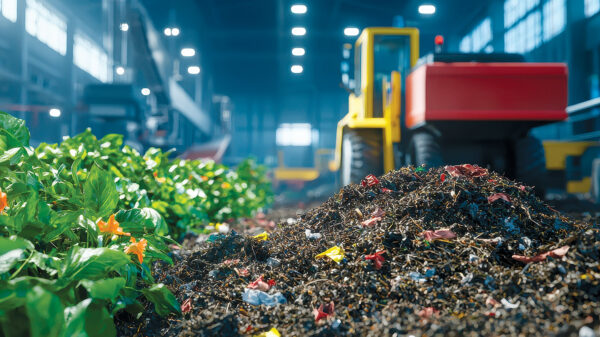



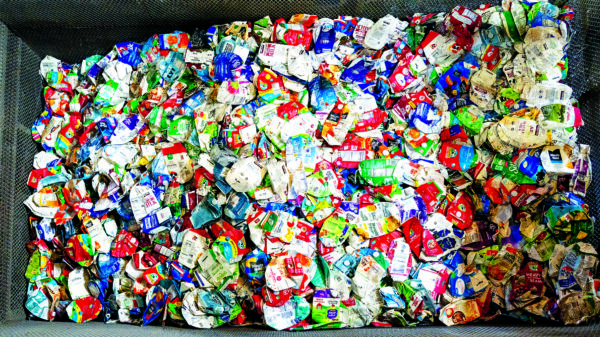












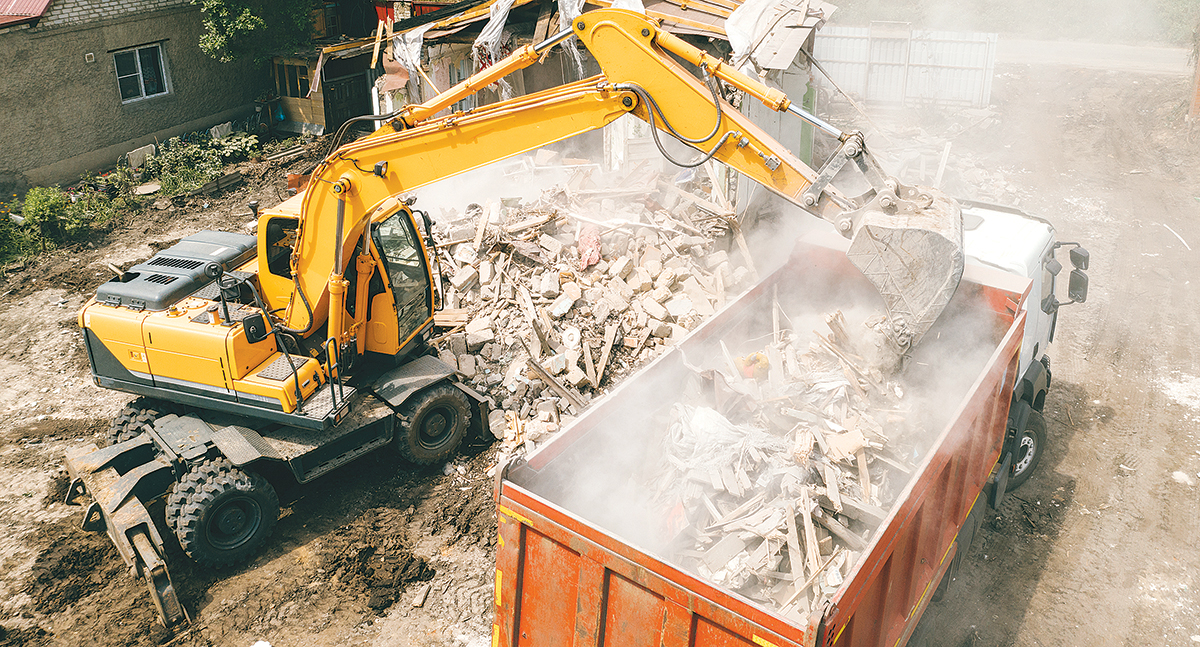
From construction sites to suburban developments, industry professionals agree that proximity to processing facilities often determines whether materials are diverted from landfills or discarded.
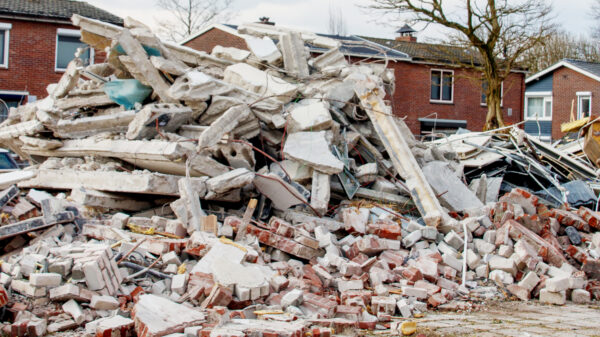
Construction and demolition (C&D) recycling has made meaningful progress in recent years, driven by sustainability mandates, evolving building practices and growing demand for reclaimed materials. Yet for many contractors and recyclers, one persistent barrier continues to undermine those gains: distance. When a jobsite is located far from established recycling infrastructure, the economics, logistics, and even feasibility of recycling can quickly unravel.
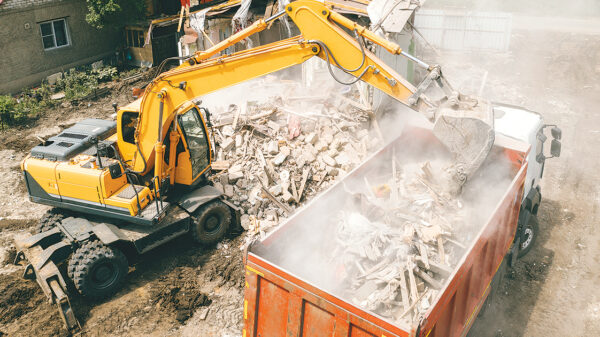
From rural construction sites to sprawling suburban developments, industry professionals agree that proximity to processing facilities often determines whether materials are diverted from landfills or discarded. Todd Thomas, chief executive officer of Woodchuck, a climate impact startup revolutionizing sustainable waste management and green energy production put it simply, “Proximity is always a limiting factor. Transporting construction materials over any significant distance is cost prohibitive.” That reality continues to shape decisions in the field, where even well-intentioned sustainability efforts must compete with tight budgets and operational constraints.
The Economics of Distance
For contractors on the ground, the most immediate challenge is cost. Transportation expenses can quickly outweigh the financial and environmental benefits of recycling, particularly for heavy or low-value materials.
Daniel Cabrera, owner and founder of Roof Direct in San Antonio, said he sees this dynamic play out daily in the roofing sector. “Tear-off roofing material is the largest source of C&D waste in America, and distance to the nearest asphalt shingle recycling facility determines whether the material will be recycled or landfilled,” he said.
The numbers reinforce his point. According to the U.S. Environmental Protection Agency, approximately 15 million tons of asphalt shingle waste are generated annually in the United States, yet less than 5 percent is recycled. Cabrera attributed much of that gap to hauling costs. “Haulers will pay up to two to three times as much to take shingles to a recycling facility when compared to landfill disposal,” he said. “Most roofing contractors don’t have the room in their budget to cover those expenses.”
Thomas echoed that economic tension, emphasizing that distance alone can derail otherwise viable recycling efforts. When materials must travel too far, he said, “the economics just don’t work,” forcing crews to default to landfill disposal as the most practical option.
Anna Perks, owner and founder of Perks Deconstruction in Colorado, said access and cost are the barriers. “In more remote areas, access to end markets for key material streams can be limited,” she said. “If a processing facility is far away, we include that cost in our bid. If the added cost isn’t something the client is willing to take on, then we’re often not awarded the project.”
The implication is clear: even when contractors want to recycle, the financial model often doesn’t support it. As Cabrera noted, recycling rates will struggle to improve “until hauling to recycling facilities becomes cheaper than hauling to landfills.”
Why the Traditional Model Falls Short
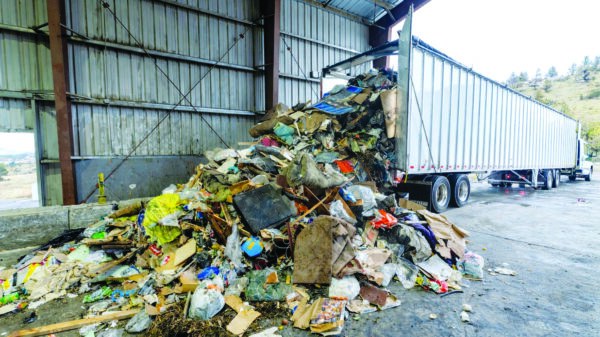
Compounding the challenge of distance is an industry model that, in many cases, works against efficient recycling. For decades, sorting has typically occurred after materials are collected – offsite, in mixed loads, and often under less-than-ideal conditions.
Thomas said that approach is fundamentally flawed. “Trying to sort materials after they have already been commingled doesn’t work,” he said. “It is excessively labor intensive and does not provide any significant yield in recoverable materials.”
Indeed, typical material recovery facilities (MRFs) often recover less than 10 percent of incoming mixed waste. “Atrocious,” Thomas said bluntly. “Ninety percent of the material is ending up in landfills.”
That inefficiency is not just a technical issue – it is a structural one. By the time materials reach a facility, contamination has already compromised their value. Clean wood, cardboard and plastics become difficult, if not impossible, to recover at scale.
“The answer is to pre-sort, divert, recover, recycle,” Thomas said. “Proper presorting and material recovering can divert over 70 percent of the total material from a job site.”
Moving Sorting to the Source
If distance makes recycling harder, better sorting makes it easier – and more viable. Increasingly, the industry is recognizing that the most effective place to separate materials is not at the facility, but at the point where waste is generated.
Thomas emphasized that success starts even before materials hit a bin. “Not just on-site sorting, but pre-sorting,” he said. “Break materials down and presort into dedicated receptacles – wood, cardboard, plastic, metal.”
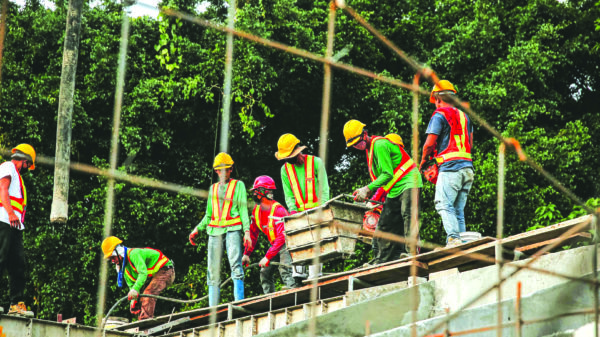
Just as important is proximity within the jobsite itself. “Receiving containers should be as close to where the work is happening as is practical,” Thomas said. “Any significant distance and compliance will suffer. Workers will not want to repeatedly trek across the job site to put material in the correct container.”
Simple operational details can make a significant difference. Clearly labeled containers – ideally with signage in multiple languages and visual cues – help ensure materials are deposited correctly. “The easier you make it for workers to separate and correctly deposit the materials, the better compliance you will receive,” Thomas said.
Cabrera has seen similar results in roofing projects. “On every job, we provide two containers – one for material only and another for debris,” he said. “That move is the key difference between recyclable material and a contamination rejection.”
Planning as a Critical First Step
While on-site practices matter, experts agree that the foundation for successful recycling is laid well before construction or demolition begins.
“Early-stage planning is critical,” Thomas said. “On-site material recovery receptacles need to be as close to the work as possible.”
Zink echoed that sentiment, noting that waste management planning should be integrated into the earliest phases of a project. “Early conversations with the contractor are crucial,” she said. “The project goals should be developed with the owner, and bringing the general contractor into those conversations early helps set expectations.”
Perks added that planning reduces inefficiencies across the board. “The more times our team has to touch and move material, the more labor and time it takes,” she said. “It’s important to have a clear plan for where materials are going before starting the project.”
In rural or less constrained environments, that planning can actually create an advantage. “Maintaining multiple bins on site for different material streams can be impossible in a dense city, but completely realistic in a rural setting,” Zink said.
Even with better sorting and planning, distance remains a fundamental challenge – particularly for projects located far from recycling centers. To address that gap, many operators are turning to mobile equipment and decentralized processing strategies.
Thomas described mobile consolidation equipment as “a total game changer.” By reducing the volume of materials before transport, contractors can significantly improve hauling efficiency. “Chipping wood, bailing cardboard and plastic allows you to dramatically increase the tonnage that can be moved in a single truck,” he said. “It will significantly increase the radius that is economically feasible.”
That shift can turn recycling from a cost burden into a financial opportunity. “This can be the difference in diversion, material recovery and recycling becoming a financial incentive,” Thomas said.
Perks noted that while mobile solutions hold promise, they are not always easy to deploy. “In theory, mobile units could help address some of the access challenges,” she said. “In practice, it can still be difficult to deploy those solutions in more remote areas.”
Still, when conditions allow, on-site processing – whether through wood chipping, aggregate crushing or material consolidation – can reduce reliance on long-haul transport and keep materials closer to their point of origin.
Avoiding Common Pitfalls
Even with the right strategies in place, certain missteps can undermine recycling efforts. One of the most common, according to Thomas, is attempting to sort materials too late. “Trying to sort materials after they have already been commingled doesn’t work,” he said.
Perks pointed to another frequent issue: unnecessary material handling. “If something gets placed in a temporary location instead of directly into a designated area, it adds time and labor,” she said.
A lack of understanding of downstream requirements can also create inefficiencies. “Different recyclers have different specifications,” Perks said. “Knowing those ahead of time helps avoid unnecessary sorting or rework.”
As the industry looks ahead, technology is emerging as a powerful tool for improving recycling outcomes – particularly in challenging environments.
Thomas pointed to artificial intelligence as a potential game changer. “AI is the most powerful tool to hit the world, maybe ever,” he said. “AI image recognition is the perfect tool for material identification and pre-sorting.”
By integrating image capture systems into collection points, operators can monitor material streams in real time, flag contamination, and provide immediate feedback to crews. “Utilizing dedicated, easily identified collection containers leveraging real-time image recognition systems can drive compliance and successful material recovery rates of over 95 percent,” Thomas said.
That level of visibility not only improves operational efficiency but also provides valuable data – something that is becoming increasingly important as project owners demand measurable sustainability outcomes.
Rethinking Waste as a Resource
As construction activity accelerates – driven by data centers, infrastructure projects and new manufacturing facilities – waste volumes are increasing. What is changing is how the industry views that material.
“There is a growing understanding that waste has inherent value when handled correctly,” Thomas said.
Perks sees that shift as well, particularly in the growth of reuse networks and local markets. “More nonprofits, resale outlets, and community-based reuse networks would have a significant impact,” she said.
Zink pointed to regional reuse hubs as another promising development. These facilities can process materials locally and redistribute them within the community, reducing transportation needs while creating economic value.
Longer term, the industry is beginning to rethink building design itself. “Designing buildings for disassembly will be key,” Perks said. “If structures are built with future reuse in mind, it becomes much easier and more cost-effective to recover materials.”
by MAURA KELLER
mkeller@americanrecycler.com
Published June 2026