
























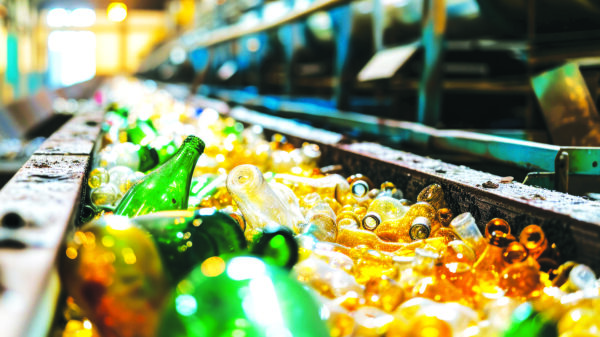






















From artificial intelligence (AI) powered optical sorters to increased recovery rates to mobile recycling efforts, the glass recycling industry is facing a wave of innovative efforts to improve the ongoing stagnant industry.
According to Zeb Parsons, president of Bricolage Dynamics, Inc., a glass recycling company based in Greenville, South Carolina, glass recycling stalled around 2017 but has reported modest growth in the last five years.
“I believe the reported figure is around 33 percent of municipal solid waste (MSW) glass is recycled every year. Personally, I feel this number is high,” Parsons said. “I feel we are more stagnant as a whole.”
For Parsons, increasing costs are the biggest limiting factor and then there are other off-chute problems like long, archaic supply chains, large facilities sitting on outdated equipment and of course, cross contamination.
“Contending with these subset challenges all lead to a higher cost that private and public entities aren’t equipped to deal with, ultimately reducing recycling efficacy,” Parsons said.
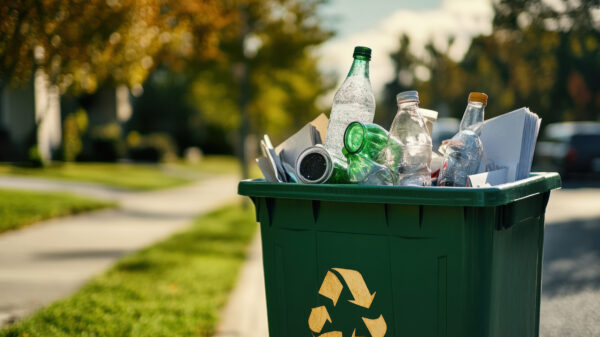
According to Gaspard Duthilleul, chief operating officer of Greyparrot, there’s a clear divide when it comes to glass recycling in the U.S. In the 10 states with a deposit return program, or ‘Bottle Bill,’ glass is returned separately, creating a clean and valuable stream. In the rest of the country, it’s mixed into single-stream bins, and that’s a completely different story.”
Glass can make up 15 to 20 percent of the total tonnage received by a material recovery facility (MRF). While it’s highly recyclable once it reaches a recycling center, operationally, it’s often seen as a liability. “Glass frequently breaks during collection and compaction, long before it even arrives at the sorting facility,” Duthilleul said. “Those broken shards can damage equipment, pose safety risks for staff and contaminate other material bales. That’s why most MRF managers focus first on getting glass out of the system.”
According to Duthilleul, the industry accomplishes this using screens that filter by size, but these screens don’t only catch glass. They also capture small items, such as bottle caps, bits of plastic and pieces of metal, some of which, like cosmetic packaging, could be valuable if recovered. The result is often a low-value mix of ‘fines.’
“So we’re not just missing opportunities to recover glass; we’re also losing other valuable materials that get screened out alongside it,” Duthilleul said.
Some advanced facilities, such as Murphy Road Recycling in Connecticut, for example, show that this problem can be solved with secondary cleaning processes that purify the glass stream into a high quality commodity.
“The technology exists, but it requires significant capital investment that many MRFs can’t justify, especially without strong local markets for the recovered product. The decision to put glass in single-stream bins at the curb doesn’t just affect whether glass gets recycled. It has ripple effects across the entire value chain, impacting the facilities and stakeholders that have to manage the consequences,” Duthilleul said.
Parsons says he’s not seeing any significant technological innovations that are poised to transform the glass recycling industry.
“I typically don’t look for them in an industry where processes need to be innovated first. In the supply chain field you work in order from people to process to tech, I don’t think we’ve reasonably gotten to tech,” Parsons said.
That said, if Parsons had to reference an innovation in the glass recycling world, it would be that the general processing equipment has gotten more efficient.
“There’s also a large movement to turn glass into sand aggregate with fairly self-contained machines that don’t require the capital investment that traditional glass recycling operations used to need,” Parsons said. “These machines have led to a tremendous amount of upstarts in the glass recycling world, both private and public. It’s important to note that time will tell if all these new recyclers will be able to scale their systems and find the profitability needed to remain open – in municipal cases, cost savings needed to justify acquisition and operating costs. If these operations hold out, glass recycling rates should increase.”
Some technology inroads are being created in certain segments of the glass recycling industry. For example, evolving advanced sorting systems are using AI to improve the accuracy and speed of separating glass from other mixed waste. In addition, glass recycling companies are introducing mobile glass recycling units that can be utilized in more remote areas, capturing glass that may not enter the recycling stream.
From an equipment standpoint, the new electric melting technologies are replacing traditional gas-fired furnaces in the recycled glass packaging industry. Glass laser morphing is the latest technological advancement that uses lasers to melt and shape various types of glass with different melting points. The technology bypasses energy-intensive furnaces and is ideal for recycling mixed-glass waste.
Industry Innovations
A wide range of local and regional initiatives exist for glass recycling, with solutions often tailored to an area’s specific needs and infrastructure.
Parsons points to the Glass Packaging Institute, which is working to expand and promote effective glass recycling operations and practices.
“From my perspective, municipalities aren’t leading the charge in best future practices in the industry,” Parsons said. “They typically are tight on cash and are split in many different directions. However, municipalities do appear happy to adopt efficiencies and promote successful operations and practices. Overall, I’m seeing more innovations come from the private sector with adoptive municipalities being more than happy to promote these programs etc.”
Ripple Glass is one example of an innovation program that evolved out of the need for an avenue for glass recycling in the Kansas City region. According to Ripple Glass, in 2009 residents and businesses in Kansas City threw away nearly 150 million pounds of glass. With no glass recycling facility available to process the glass, all of it ended up in landfills.
Ripple Glass constructed a state-of-the-art processing plant and placed large, dedicated bright purple glass recycling bins throughout the Kansas City metro area to collect glass. The glass is then converted by a Kansas City business into fiberglass insulation, and a business in Tulsa turns amber glass back into bottles.
And now Ripple Glass has purple bins throughout cities and towns in Illinois, Iowa, Kansas, Missouri and Nebraska. Ripple’s original Kansas City facility is processing glass from all over the region, helping over 100 communities across nine states keep glass out of their landfills.
Looking Ahead
From Parsons’ perspective, he expects the glass recycling industry to grow but he believes it’s going to change considerably from what it is now and there could even be some dips along the way.
“It’s in a point of flux,” said Parsons, whose glass recycling operation, Bricolage Dynamics, is working to create smaller, regional glass recycling operations that only service a 2.5 hour radius from a processor.
“This helps to keep costs down on transport, to reduce operational size and costs and to ultimately reintroduce more revenue and ultimately profit back into the glass recycling industry,” Parsons said. “Personally, I feel you’ll see more of these style businesses as the years go by.”
He also believes that the older, larger, regional glass recycling institutions that service multiple states, with intake supply chains extending up to seven hours, are going to continue to feel the pressure of increased costs and lack of supply.
“Their large factories require an enormous amount of glass to stay profitable and I think they’ll continue to feel the squeeze on staying competitive in this changing industry. As time moves on the smaller, regional operations will most likely cut these larger entities’ supply sources as it will be cheaper for communities to process their glass in their own backyards and not seven hours away,” Parsons said.
Municipalities will continue to have to prioritize keeping the system running, doing the best they can with the resources they have available, hopefully innovating if possible.
“I think, more importantly, municipalities should be looking toward public/private partnerships which I believe will accelerate glass recycling numbers via the reduction of costs and the increase in profit,” Parsons said. “I think the future is really bright for the industry. We just have to keep in mind that with the way the market shifted post 2017 and then again post COVID, it’s still early days to know exactly how the story of glass recycling in the U.S. will unfold. I’m optimistic.”
Published November 2025