
























The metal recycling market during the last quarter of 2025 indicates an industry landscape that is facing sustainability mandates, technological advancements, increasing industrial demand, and short-term price volatility.
According to Ryan Lutz, a metals inventory veteran who has led GA Group’s metals and metals manufacturing inventory valuation practice since 2010, we’ve seen continued consolidation in the industry over the past five years.
“This goes along with the theme of vertically integrating the steel makers’ raw material supply. With the expansion of steel-making capacity in the U.S., the demand for ferrous scrap domestically has risen and securing that raw material supply is more important to the producers than it ever has been before,” Lutz said. “Along with vertical integration, we’ve seen other scrap processors busy with M&A activity to grow their footprint and capabilities – like SA Recycling acquiring a number of processors over the past five years.”
Technological advancements in “traditional” scrap recycling have been key to maximizing yield out of the traditional scrap material or even what has been thought of as waste over the past 5 to10 years. As Lutz explained, advanced separation systems have been deployed to extract “hard to recover” nonferrous metals and even precious metals from auto shredder residue.
“The advancements in the separation systems have decreased the traditional fluff piles being landfilled and allowed for highly profitable metals to be extracted,” Lutz said. Generally speaking, with the advent of more advanced separation systems, processors are maximizing yield and reducing waste from the metals recycled and they’re doing it more efficiently than they’ve been able to do it before.”
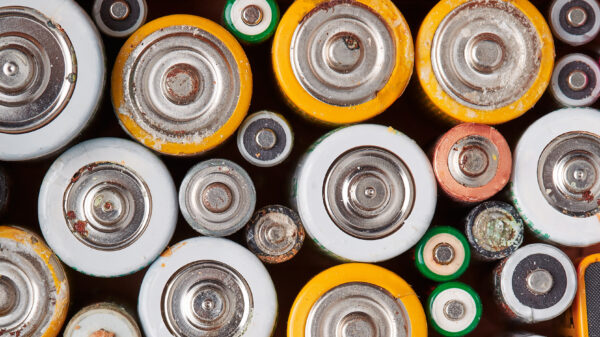
EV battery and other lithium ion batteries have become a growing segment of metal recycling in the U.S. over the past five years. There have been large investments into startups and other companies to advance the technologies around recycling EV/lithium-ion batteries and making that process circular with in the U.S.
“As EV adoption continues and the batteries are reaching end of life, there needs to be a way to efficiently recycle the batteries and extract the metals from them and we’ve see companies like Redwood Industries or Li-Cycle (now owned by Glencore) among others take on that challenge,” Lutz said.
From the perspective of a company working primarily in scrap metal recycling, Allen Burns, owner of Richard S. Burns & Company, has seen the metals recycling market stay relatively stable over the past five years.
“Currently, the metal recycling market has been comparatively stable amid national economic headwinds, and we’re expecting it to remain strong for the foreseeable future. However, the biggest and most consistent challenges facing this market have been related to metals processing and labor. Technological advancements in tracking and quoting scrap metals have had a great impact on the metals recycling market in recent years,” Burns said. “Through my relationships with other leaders in metals recycling, I’ve heard positive feedback from companies using these applications to improve their processes.”
“Over the past four to five years, we’ve seen significant consolidation in the metals recycling market,” said Vince Pappalardo, managing director and leader of BGL’s Metals & Advanced Metals Manufacturing team. “With new mill builds and expanded capacity, regional demand for scrap has intensified as companies are sourcing locally, which has led to tighter regional markets and shifting M&A dynamics.”
Hubert de la Vauvre, director in BGL’s Metals & Advanced Metals Manufacturing team, added that “there’s been a big push by mills to produce ‘green’ steel because it shows well to their stakeholders that recycling and the environment are top of mind. It doesn’t play a huge part, but it’s likely to appear in conversations in board meetings.”
According to de la Vauvre, consolidation in the metals recycling market has been both positive and negative. On the positive side, it’s made scrap metal recyclers extremely valuable to strategic buyers who are willing to pay up for quality assets. But the downside is that smaller, family-owned scrap yards are getting squeezed out.
“As larger players continue to consolidate, they’re taking market share from mom-and-pop operators who simply can’t compete on price,” de la Vauvre said. “We’ve seen several of these smaller recyclers forced to sell to competitors, often at steep discounts, compared to what their businesses would have been worth just a few years ago.”
Tariffs have also created an anticipated increase in demand for scrap metal. According to Pappalardo, with new mill builds and expanded capacity, regional demand for scrap has intensified and companies are sourcing locally rather than moving heavy material across the country, which has led to tighter regional markets and shifting M&A dynamics. On the opposite side, there have been improvements in the availability of substitutes for scrap products, which have fueled demand to make better steel using more iron substitutes rather than scrap to make higher-quality steel.
“Tariffs have also further fueled reshoring efforts and efforts to increase manufacturing in the U.S., which has generally been a good thing for the metal recycling industry,” Pappalardo said.
Continuous Flexibility
Overall, Lutz said the metal recycling industry and operating companies are reacting to an unpredictable environment as best as possible and changing as needed on the fly.
“It’s been a challenging environment with volatile pricing and unpredictable outside factors affecting demand and supply chains,” Lutz said. “The tariffs have also caused differing impacts on the recycling industry based on the commodity. Largely the tariffs have reduced foreign demand for the metals due to some retaliatory measures so there’s been more supply domestically to be consumed. On the ferrous side, it’s limited the price increases as supply has been available. On the aluminum side of things, the increased domestic price of prime aluminum from tariff policies has driven the aluminum scrap pricing upwards. Ultimately, the tariff policy itself has proven challenging from a predictability standpoint and continues to be an unknown factor when scrap markets are looking ahead.”
Lutz sees the metals recycling market continuing to evolve much the same as we’ve seen over the past five years but with further advancements and implementation of AI technologies to enhance and maximize recycled yields, continuing to drive more profitability.
“I also see the battery recycling segment growing based on need with further investment either from non-industry – think venture capital or PE players – or from larger miners like we saw with Glencore’s acquisition of Li-Cycle, which will be looking to extract the metal content without the cost of making a mine productive,” Lutz said.
From Pappalardo’s perspective, he expects further consolidation, but probably at a slower pace, as companies will only fill in the gaps rather than trying to secure large amounts of supply.
“Actual market prices should be strong as the manufacturing base in the U.S. grows. Even the infrastructure needs are going to increase demand on steel. The more demand for steel, the better for recycling companies,” Pappalardo said.
For de la Vauvre, the biggest thing he expects that will happen in the recycling market is that foreign players are going to play a much bigger role and are going to start controlling that market a lot more than they used to.
“Because of the tariffs, we have created this demand of Asian players, specifically because they want to make sure they are a major player in the U.S. My prediction is they’re going to become a much bigger player than we all anticipate,” de la Vauvre said. “We see this interest of foreign entities in the U.S. market as a positive in the short term because there is a need for more competition in this space. I think that’s a positive in the near term. In the long term, the question becomes how much of the market we want to be owned by foreign entities.”
by MAURA KELLER
mkeller@americanrecycler.com
Published December 2025