

































Manufacturers
American Pulverizer Company The Conair Group Cumberland Size Reduction Eldan Recycling EREMA North America, Inc. Franklin Miller Inc. Granutech-Saturn Systems Herbold Meckesheim USA Hosokawa Polymer Systems Rapid Granulator Rotogran International Inc. Vecoplan LLC |

by MARY M. THORNTON
maryt@americanrecycler.com
There is a handful of market factors involved in the profile of the overall granulators industry. Government recycling mandates, recycled material demand, technology innovation and environmental impact are typically among the most prominent aspects that may cause changes in the industry. Despite challenges that may affect the industry, it is expected to grow to at least 4.3 billion by 2035, according to a recent estimate source. Related equipment offered by the manufacturers noted below can assist recyclers in processing a variety of materials.
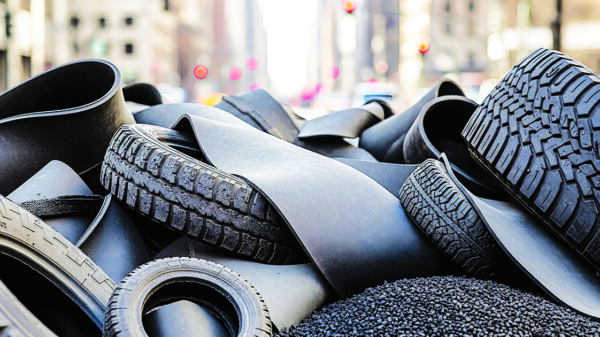
Granutech-Saturn Systems manufactures a comprehensive line of equipment for waste tire processing, capable of producing material ranging from rough shred to fine powder. Matt Morrison, president, recycling system solutions, said the company’s “industry-leading Saturn® Powderizers can reduce waste tires and rubber granulate to a coarse crumb, typically in the 6 to 20 mesh range. Output capacity generally ranges from 1,000 to 2,000 pounds per hour and while some customers operate a single unit, others regularly run more than 10 machines.”
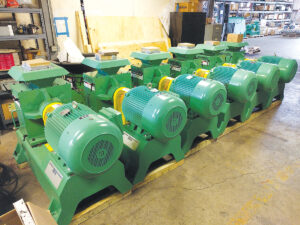
Granutech-Saturn Systems
Morrison noted that Granutech-Saturn has been a leader in the size reduction industry since 1968, providing specialized equipment to a wide range of markets, including tires, rubber, plastics, electronic scrap, metals and more. “Although the company has seen a strong start to the current year, 2025 was challenging for capital equipment purchases, as many companies remained cautious due to tariff uncertainty and fluctuating interest rates. Permitting requirements can also occasionally pose additional challenges for buyers considering new equipment acquisitions.”
He added, “Our company’s success in the marketplace is fueled by continuous investment in advanced fabrication, precision machining and integrated automation capabilities, applied across both standalone machines and complete recycling systems. With more than 50 years of experience, Granutech-Saturn Systems brings deep application knowledge, engineering expertise, durable equipment and reliable support, earning its reputation as a trusted leader in the recycling industry.”
Those with Eldan granulators use their machines to turn waste streams into clean, reusable granules for resale or in-house processing, making them central to efficient, circular-economy systems. Eldan machines are designed for durability, safety and adaptability to diverse input streams, helping operators meet varying market and regulatory demands without frequent equipment changeovers.
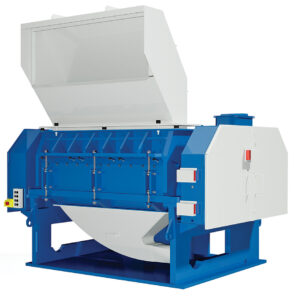
Eldan Recycling
While Eldan’s designs aim to reduce downtime, users must still plan for periodic maintenance such as knife regrinding, wear-part replacement and screen changes. Setup and commissioning can require skilled technicians to ensure optimal throughput and material quality. Also, balancing processing volume with energy consumption and space requirements can be a logistical challenge, particularly in facilities handling multiple material types. Eldan can provide assistance in properly handling any of these tasks.
Carsten Nielsen, product manager, added that “global recycling markets are pushing toward higher material recovery rates, closed-loop systems, and reduced environmental impact, so granulators are increasingly integrated into automated lines that combine shredding, sorting, washing and pelletizing. There is a growing demand for noise and dust reduction features, as well as smarter monitoring systems for predictive maintenance. Eldan’s quick-access and wear-resistant designs align with these trends, enabling recyclers to meet stricter quality standards and potential future regulations that may target waste reduction and microplastics control.”
Established in Denmark in 1956, Eldan offers a complete recycling equipment range beyond granulators. Their shredders, separators and fully integrated lines allow recycling clients worldwide across multiple material sectors, to source turnkey systems.
Vecoplan’s stacked configuration system integrates shredding and granulating in a single unit. Matt Lowman, marketing and communications director, commented, “The effectiveness of any plastics recycling process ultimately comes down to the quality of the regrind – and that begins with the granulator. Our powerful stacked system processes plastic scrap into uniform particles – typically 3/8 inch or smaller – that can be fed back into production with minimal impact on performance. Consistent granulate ensures stable melt flow during extrusion or molding, reduces defects and helps manufacturers maintain product quality while incorporating recycled content. Our VAZ series shredder sits directly above the granulator, creating a vertical flow of material between stages. This reduces the need for conveyors, minimizes handling and lowers the risk of contamination.”
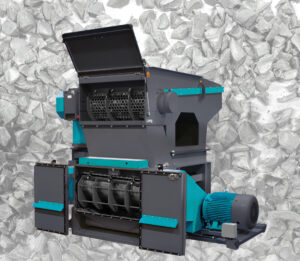
Vecoplan LLC
Processing starts in the shredder. It reduces bulk scrap into smaller, manageable pieces and material and then discharges directly into the granulator. To maintain steady throughput, the Vecoplan system monitors the granulator’s amperage. If the load nears capacity, the shredder’s ram automatically retracts until conditions stabilize, preventing strain and protecting the cutting chamber. At the second stage, the granulator delivers precision sizing. By refining pre-shredded plastic into clean, uniform particles, the granulator produces high-quality regrind, ideal for in-house recycling. This material can be blended seamlessly with virgin resin, improving efficiency and reducing waste.
The Vecoplan stacked design also provides practical benefits. “With the shredder positioned above the granulator, the system requires significantly less floor space than separate machines. It’s an ideal solution for users who intend to expand facility capacity or implement scrap reclaim, but without increasing the footprint of their processing area. By uniting two critical processes, our VAZ Series stacked system ensures reliable performance – transforming plastic scrap into a valuable, production-ready resource,” Lowman concluded.
Published in the March 2026 Edition of American Recycler News