
























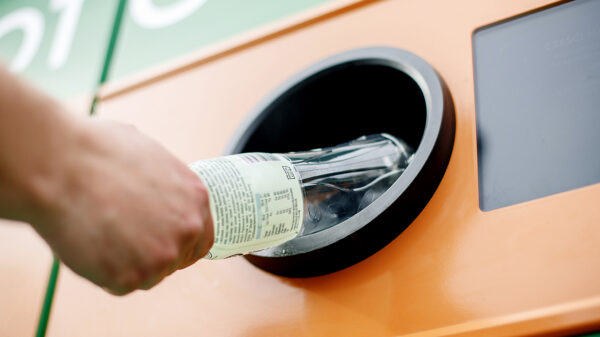




















Globally, only about 25 percent of electronic waste (e-waste) is recycled by both consumers and businesses alike. Increasing the amount of e-waste being recycled would remove environmentally harmful pollutants, but also recover valuable materials like platinum, palladium and copper.
Creating a circular economy for end-of-life vehicle components, including complex polymers, composites and adhesives is top of mind for many within the automotive manufacturing and recycling industries. And while efforts to improve end-of-life vehicle (ELV) recyclability is on the rise, thanks in part to new regulations, technological advancements and supply chain collaboration, challenges continue to emerge in the auto recycling industry.
As the director of social and sustainable enterprises at Florida State University, Mark McNees shared findings from students’ research on the expanding landscape of recyclable materials in ELVs.
According to McNees, students’ research reveals that the automotive recycling industry is undergoing a significant transformation. While vehicles have historically achieved 95 percent recyclability rates by weight through metal recovery, the industry is now aggressively targeting the remaining 5 percent – predominantly plastics, glass and rubber composites, that previously went to landfills.
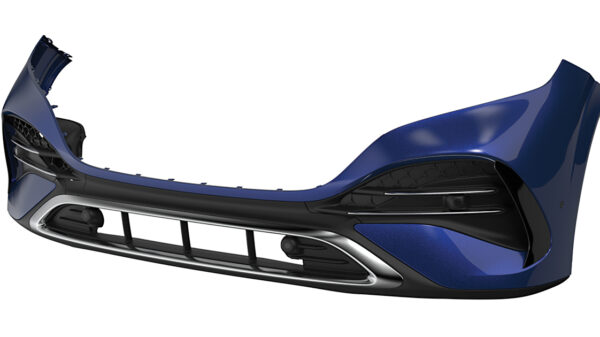
In his role of managing clearance operations, Brian Davis, chief executive officer of Handy Rubbish, a waste management company headquartered in the UK, frequently encounters ELVs headed for shredding or landfill. He’s seen the loss of plastics, glass and rubber post-shred, despite the fact that materials such as plastic bumpers or plate glass have recycling value.
“A considerable problem is that the pre-shredding sorting often doesn’t work, and the mixture of plastics, coatings and rubber parts make recovery post-shred effectively impossible, leading them to the landfill rather than circular use,” Davis said. “Facilities usually handle vehicles en masse and that is how materials such as rubber in tires and gaskets and glass, wind up undervalued and underused.”
Davis is watching with great interest, developments surrounding AI-assisted ASR sorting, rubber in green steel and studies on plastics recovery.
The plastics problem
“Modern vehicles contain an average of 411 pounds of plastics per vehicle, with plastics comprising about 50 percent of vehicle volume, but only 10 percent of weight. Our students discovered that leading recycling facilities are implementing chemical recycling processes, particularly pyrolysis and depolymerization techniques, which break down mixed automotive plastics into their original monomers,” McNees said. “This development is crucial because automotive plastics often contain additives and reinforcements that have historically complicated mechanical recycling.”
The research coming out of Florida State University’s Social and Sustainable Enterprises program identified several companies that are deploying post-shredder technology (PST) using advanced sensor-based sorting, including near-infrared spectroscopy and density separation. These systems can reportedly identify and separate different polymer types – from polypropylene bumpers to polyurethane foam seats – with accuracy rates exceeding 90 percent.
“The students also found that automotive glass recycling has evolved substantially beyond windshield processing. Industry leaders are now using laminated safety glass processing that recovers both the glass and polyvinyl butyral (PVB) interlayer separately. The PVB, previously considered waste, is being repurposed for architectural applications and new automotive components,” McNees said.
The research also highlighted how electric vehicles are introducing new challenges with specialized glass containing embedded heating elements and heads-up display capabilities. Progressive recyclers have developed protocols for extracting these electronic components before glass processing, ensuring both material streams remain uncontaminated for maximum value recovery. While protocols exist, widespread adoption is emerging and evidence focuses more on general glass shredding than specific extraction details.
The battery recycling evolution
According to Steve Christensen, executive director at Responsible Battery Coalition, over the past decade, the recyclability of vehicle batteries, especially lithium-ion batteries (LIBs), has shifted from a niche and underdeveloped process to a rapidly expanding industry driven by innovation, market growth and supportive regulations.
“In the early 2010s, recycling LIBs involved energy-intensive and emission-heavy methods that recovered very little usable material beyond primary metals,” Christensen said. “Today, most LIB recycling techniques produce no emissions and consume significantly less energy. Material recovery has greatly improved, but further advancements are necessary before achieving circularity on a commercial scale.”
Rubber and tire innovations
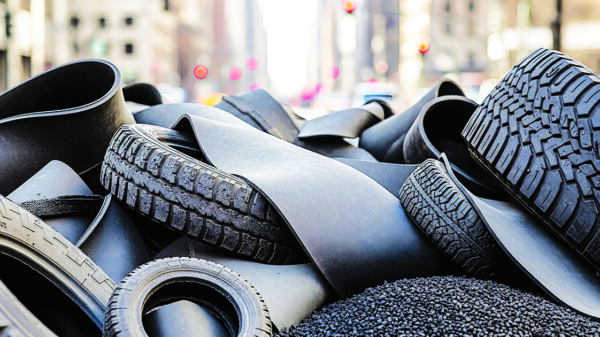
While tire recycling is well-established, our students’ research uncovered promising developments in devulcanization technology. As McNees explained, this process reverses the sulfur cross-linking in rubber, enabling reprocessing into high quality applications rather than just playground surfaces or fuel. Industry reports indicate recovered rubber is being successfully incorporated back into new tire production at rates up to 15 percent, without performance degradation.
The research also identified particularly exciting developments in recovering advanced materials from modern vehicles:
- Carbon fiber recovery from high-performance vehicles through solvolysis techniques that preserve fiber length and strength properties
- Rare earth elements extraction from electric motors and sensors, with some facilities achieving 95 percent recovery rates through hydrometallurgical processing
- Advanced composites from EV battery casings, which are being mechanically processed and reincorporated into new structural components
In addition, many companies are making strides in making components in vehicles more recyclable. Take HydroGraph Clean Power Inc., for example. The company produces ultra-pure graphene through a sustainable, low-energy process that is enabling new ways to reuse recyclable materials in vehicles. Graphene can be incorporated into plastics, rubbers and composites to make them stronger, lighter and longer-lasting. This helps extend the useful life of these materials and makes them easier to recover at end-of-life.
Specific automotive applications include:
- Plastics – Graphene-enhanced plastics are being explored for dashboards, door panels, bumpers and under-the-hood components, improving both durability and recyclability.
- Rubber – Graphene-infused rubber can increase the performance and lifespan of tires, while also improving prospects for recycling and reuse.
- Glass and coatings – Graphene-based coatings can protect glass and interior materials from wear and damage, extending their reusability.
- Composites – Lightweight graph- ene-reinforced composites can replace heavier materials, reducing vehicle weight while supporting circular use.
Unlike traditional nanomaterial production, HydroGraph’s method is environmentally responsible, offering automakers and recyclers a viable path toward circularity of non-metal auto components.
Digital technologies help
Florida State University students discovered that forward thinking companies are implementing blockchain-based material passports. According to McNees, these digital product passports track material composition throughout a vehicle’s lifecycle, dramatically improving sorting efficiency at end-of-life. Some facilities using QR-code systems report 40 percent reductions in processing time and 25 percent increases in material recovery value. However, the 40 percent time reduction, 25 percent value increase are not widely documented; but general improvements are noted in supply chain and waste management.
“Artificial intelligence is also transforming the industry,” McNees said. “Machine learning algorithms are being deployed to predict optimal dismantling sequences based on vehicle models, maximizing both recovery rates and worker safety. Some systems have catalogued over 10,000 vehicle configurations, providing real-time guidance on material location and removal techniques.”
Economic viability shifts
The university’s research also revealed dramatic economic improvements in recycling viability. McNees explained where plastic automotive parts once had negative value, advanced sorting and processing now generate $300 to $500 per ton for clean, sorted automotive plastics. Industry analyses show that comprehensive ELV recycling facilities incorporating these technologies achieve return on investment within three to four years.
“Our students’ research indicates the industry is actively preparing for the wave of electric vehicles reaching end-of-life by 2030. These vehicles contain significantly different material compositions, including more aluminum, advanced polymers and electronic components. Leading recyclers are developing modular systems that can adapt to these changing material streams,” McNees said.
Extended producer responsibility (EPR) policies also are driving innovation, with automakers increasingly designing for disassembly, using fewer material types and incorporating recycled content specifications that create guaranteed markets for recovered materials.
“The industry’s transformation from simple metal recovery to comprehensive material harvesting represents a fundamental shift in viewing end-of-life vehicles as resource banks rather than waste streams,” McNees said. “Our students’ research demonstrates that technological innovation and economic viability are converging to make the automotive circular economy a reality.”
by MAURA KELLER
mkeller@americanrecycler.com
Published October 2025