

















































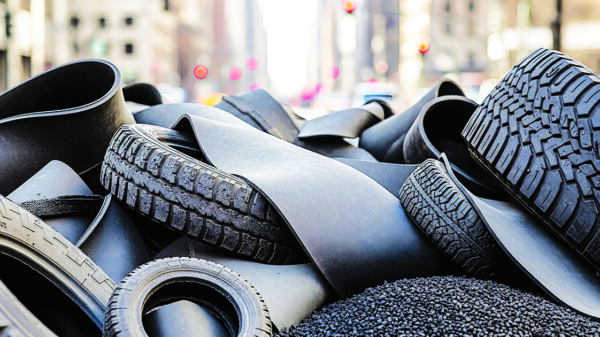





Recycling of plastics within vehicles is facing a critical turning point within the automotive recycling industry. While innovations in lightweight plastics [especially within the electric vehicle (EV) marketplace] have increased the use of plastics in vehicles, the industry is challenged by complex plastic materials that are proving difficult to process.
Historically speaking, today’s automobiles contain vastly more plastic than their predecessors – with today’s vehicles consisting of up to 50 percent plastic by volume, compared to around 10 percent in the 1960s. This evolution makes sense. Plastics offered weight reduction for fuel efficiency, design flexibility, and cost savings, but it’s created a significant recycling challenge. Likewise, in the EU, the automotive sector is the third largest consumer of plastic for new manufactured products, yet only about three percent of the plastic in new vehicles is made of recycled plastic.
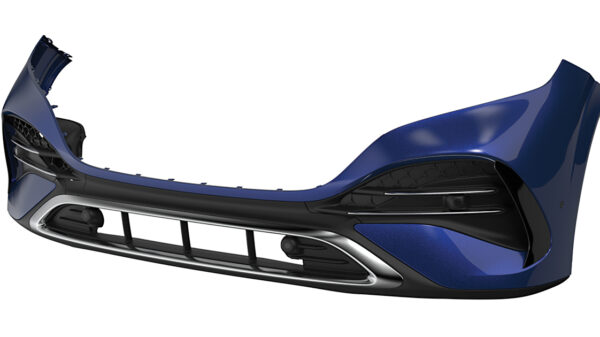
According to Cameron Knapp, machining expert and enterprise account executive at IPC Foundry Group, which serves the automotive industry, the problem isn’t just the quantity – it’s the complexity. A single vehicle now contains dozens of different polymer types, from polypropylene bumpers to ABS dashboards to polycarbonate headlight lenses, often mixed with additives, pigments, flame retardants and reinforcing fibers. What’s more, unlike valuable metals found in vehicles, automotive plastics often have low scrap value, making collection and processing uneconomical for auto recyclers. While metals have clear economic value and established recycling streams, automotive plastics are often shredded into mixed waste or landfilled, representing both an environmental loss and a missed opportunity to recapture valuable materials. And many auto recycling facilities simply aren’t equipped to handle the volume and variety of automotive plastics, especially when they are mixed with other materials.
As Knapp explained, auto recyclers also struggle because these plastics are rarely labeled, difficult to separate economically and the mixed-material components (plastic bonded to metal or foam) are nearly impossible to process with current infrastructure.
“The use of plastic in vehicles has extended far beyond interior panels and clips,” Knapp said. “They’re now sturdier and often affixed permanently to metal, reducing weight and noise. That’s where recycling gets tricky.”
Specifically, from simple, single-resin parts, automotive plastics have moved to engineered composites intended for strength, sound dampening and longevity. As Knapp said, long-fiber reinforced plastics, glass-filled nylons and multi-layer polymers “they’re everywhere these days”. These materials work well in-service, but not so well at the end of the lifecycle. When melted together, they cannot be economically separated back into usable base resin.
According to Knapp, auto recyclers are no longer just separating plastics; they are dismantling bonded assemblies that were never designed to be taken apart, creating new challenges for the industry. Auto recyclers are dealing with plastics that were not designed to be deconstructed. Today, structural plastics are bonded, welded or over molded directly to metal, so disassembly becomes a destructive job instead of a separative one. When plastics are combined with fibers, foams, coatings or metal inserts, recycling equipment can become contaminated or damaged. In these cases, the material starts to lose value quickly, making recycling more of a waste.
“As a result, because waste-plastic chips with components are challenging to recycle, there’s no cost-effective way to separate the base resin from other components if it has been melted in a mass and the equipment could be rendered unusable through contamination,” Knapp said. “That’s not a recycling problem anymore – this is a design choice that was made years ago.” Indeed, modern vehicles can contain over 50 different polymer types, many of which are advanced composites or fiber-reinforced plastics designed for strength but not for easy disassembly or recycling.
It’s also important to note that recycled plastics often cost more to produce than virgin materials. In addition, many facilities lack the specialized machinery needed to handle complex, degraded and oil-contaminated automotive plastics.
Jack Jardine is an environmental advocacy and public trust specialist working at the intersection of climate policy, public engagement and behavioral change. He supports councils, NGOs and mission-led organizations to navigate complex environmental issues, such as energy transition, sustainable transport and local climate policy, where public confidence, community consent and scrutiny are critical.
Jardine said as vehicles have become lighter and more complex, plastics and composite materials have played a growing role in automotive design.
“While these materials can support efficiency and performance goals, they often introduce additional complexity at end of life, particularly when materials are blended, reinforced, or difficult to separate,” Jardine said. However, he noted that it’s important to evaluate whether current approaches genuinely reduce environmental impact, or whether they primarily shift responsibility downstream, resulting in more orderly management of waste rather than a reduction in environmental impacts of plastics.
Steps Being Taken
While there have been advances in sorting technologies, material identification and experimental recycling processes, technology alone cannot resolve the issue, Jardine said. “Rather, public and regulatory investment is essential to ensure that recycling infrastructure can keep pace with industrial design decisions,” Jardine said. “Equally important is embedding waste reduction and recoverability into design processes from the outset. Corporate responsibility plays a critical role here, but it must be supported by environments – regulatory, economic and culture – that make responsible choices viable rather than optional.”
Knapp suggested that in order to adapt, recyclers need to use more aggressive mechanical separation techniques, use specialty shredding techniques and control contamination better.
“Certain operations are trialing the selective removal of assemblies to save/and or protect equipment,” Knapp said. “We’re seeing new interest from the manufacturing community in modular design and reversible joining methods at early prototyping. Usually, that shift begins during the cost and recyclability considerations, not after production. In our activities serving the metal and hybrid industries, we find that the best results occur when disassembly is brought up early in prototyping. The use of smarter design up front (or in an earlier phase) protects recyclers, machinery and materials.”
In addition, AI-enabled technology is making inroads in most industries and the automotive recycling industry is no exception. New systems use AI-technology and robotics to identify and separate polymers in vehicles with significant accuracy. Also, more advanced chemical recycling is now being used to break down plastics into molecular building blocks, allowing heavily contaminated automotive plastics to be transformed into virgin-quality polymers.
More and more auto manufacturers are also setting their sights on using mono-material designs, such as car seats made from a single polymer.
“While it is encouraging to see individual companies and sectors taking steps to improve recycling outcomes, lasting progress depends on cultural and structural change, not isolated efforts,” Jardine said. “Reducing waste requires shared responsibility across industry, government and society, alongside investment in innovative systems that make sustainable behavior the default.”
The good news for auto recyclers is that the Global Impact Coalition’s Automotive Plastics Circularity pilot is testing better sorting and aggregation methods across the supply chain. In addition, stricter regulations and imposed targets by auto manufacturers are pushing for greater circularity of recycled content in vehicles.
by MAURA KELLER
mkeller@americanrecycler.com
Published February 2026