







































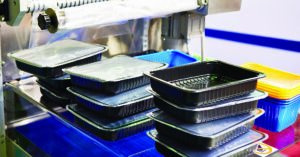
Manufacturers, packaging designers and recyclers are embracing “design for recyclability” – an approach that considers a package’s entire lifecycle during design, rather than after it’s already manufactured.
For years, efforts to improve plastics recycling focused largely on what happened after a product reached the end of its life – better sorting equipment, expanded collection programs and stronger markets for recycled resin. But many in the industry now recognize that recycling success is often determined long before a package ever reaches a materials recovery facility (MRF). Increasingly, manufacturers, packaging designers and recyclers are embracing “design for recyclability” – an approach that considers a package’s entire lifecycle during design, rather than after it’s already manufactured.
Instead of asking whether a package is technically recyclable, companies are asking whether it can realistically move through today’s collection and processing systems. Every design decision – resin selection, barrier materials, labels, adhesives, pigments, closures, additives – can determine whether a package is successfully sorted and transformed into new products. Recyclability has become an engineering challenge as much as an environmental one, pushing manufacturers to work more closely with recyclers and industry organizations to ensure packaging fits within existing infrastructure.
Recycling begins at the drawing board
Jonathan Dineen, head of design and innovation, North America, at ALPLA Recycling, said one of the industry’s biggest mindset shifts has been recognizing that recycling begins long before consumers place a package in the bin. “Recycling begins at the drawing board,” Dineen said.
That philosophy is reshaping how packaging is developed. Rather than treating recycling as an end-of-life issue, companies increasingly consider whether a package can complete what Dineen called a true cradle-to-cradle journey – where a plastic bottle is collected, recycled and remade into another bottle instead of being downcycled or lost from the stream entirely.
“When packaging is designed to work with existing collection and recycling systems, it has a much better chance of returning as new packaging rather than leaving the circular material stream,” he said.
Richa Desai, chief sustainability and strategy officer at Sabert, said many recycling challenges originate during product development. “Packaging must be thought about holistically. Every part matters, from the base resin to the labels, adhesives, colorants, closures, barriers and additives.” A package may be made from recyclable materials, she explained, but if any individual component is incompatible with current infrastructure, its odds of becoming new packaging drop sharply.
“One of the most overlooked considerations is whether the recycling infrastructure exists and whether it will actually accept the package,” Desai said.
The problem with multi-material packaging
One of the clearest examples of why design matters involves multi-material flexible packaging. Nicholas Wahl, founder of TWO Packaging and TWOFORM, said consumers often assume that if individual materials are recyclable, the finished package will be too. That’s rarely the case with laminated flexible packages common in the food industry.
He pointed to a common pouch structure combining matte oriented polypropylene, metallized PET and polyethylene. Individually, each material can be recycled, yet permanently bonding them together creates a package current systems cannot separate.
“Polypropylene is recyclable. PET is recyclable. Polyethylene is recyclable. Aluminum is recyclable,” Wahl said. “But the moment you laminate them together into one film, no sorting facility can pull those layers apart again. Four recyclable materials go in, one unrecyclable package comes out.”
Desai said multi-material constructions remain one of the biggest barriers to recycling because sorting systems are built to identify complete packages, and do not dismantle complex layers after the fact. Because MRFs sort whole packages by resin type rather than pulling apart laminates, a productʼs recyclability is effectively decided months before it enters the waste stream.
“Design is where the problem starts, so it’s where the fix has to start too,” Wahl said.
The rise of mono-material solutions
To address that challenge, manufacturers increasingly are replacing multi-layer structures with mono-material packaging – relying on a single polymer family, such as all-polyethylene or all-polypropylene, paired with advanced barrier coatings to maintain freshness. These structures carry different cost and performance tradeoffs, but offer compatibility with existing recycling systems that laminated packaging often cannot. According to Wahl, moving customers away from traditional Mylar-style structures toward mono-material packaging has produced the greatest impact. “It’s rebuilding the whole structure of the package down to one material instead of four,” he said.
Desai said manufacturers are also focusing on lighter-colored packaging that optical sorters can recognize, while incorporating post-consumer recycled content wherever possible. Sabert recently introduced packaging with 25 percent post-consumer recycled material and lighter colors that improve sorting compatibility. “We’re seeing many manufacturers design packaging that can be processed within existing recycling systems rather than waiting on the infrastructure to be in place,” she said.
Dineen agreed manufacturers are rethinking development – simplifying structures, reducing unnecessary material combinations, and evaluating every component through the lens of recyclability, while still protecting products through distribution.
“The goal is to improve recyclability while continuing to protect the product effectively, because a packaging change that results in more damaged, spoiled or wasted product is not a sustainable improvement,” Dineen said.
Small design choices, big recycling impacts
While multi-material packaging is one of the industry’s biggest challenges, smaller choices matter too. Labels, adhesives, pigments and inks often determine whether an otherwise recyclable package makes it through processing.
Wahl said labels are frequently overlooked. A recyclable container can still be rejected if the label uses an incompatible resin or an adhesive that won’t release during recycling. “Some adhesives are made to let go clean in the hot wash step recyclers use to strip labels off,” he said. “Others are made to hold on no matter what. It’s one small spec choice…and it can be the whole difference between something actually getting recycled or getting rejected at the plant.”
Desai said dark pigments, certain inks and incompatible adhesives frequently interfere with optical sorting and downstream processing. “If a package cannot be sorted correctly, it cannot be recycled, regardless of how sustainable the rest of the design may be,” Desai said. Carbon-black plastics are a well-known example, since near-infrared sorters struggle to detect them; choosing detectable pigments can meaningfully improve recovery without changing performance.
Dineen added that package size, incompatible materials and colors that degrade recycled resin quality all shape how well products move through todayʼs infrastructure. “The goal is to design it so it can be recognized and processed within the systems that actually exist,” he said.
Better design, better material – and earlier collaboration
For recyclers, better package design translates directly into improved processing efficiency and higher-quality recycled materials. Rohini Battacharjee, associate business analyst at ALPLA Group, said designing with recycling in mind benefits every stage of the process, from automated sorting through resin recovery. “By designing with recycling in mind, you can make it easier for sorting equipment to identify and easier to separate from other materials, resulting in better material yields,” she said.
“Good packaging design supports the production of high-quality recycled material that can remain in circulation for longer,” Battacharjee said.
That perspective has encouraged greater collaboration between recyclers, manufacturers and brand owners earlier in development, with recyclers increasingly helping companies understand how products will perform in real-world collection and processing systems. “The earlier those conversations happen, the better,” Battacharjee said.
Desai agreed manufacturers increasingly engage recyclers during the design phase rather than after commercialization. “Recyclers are becoming key players in the packaging design process, helping inform decisions at the start and ultimately helping drive better outcomes for the entire system,” she said. “It needs to be a collaborative process,” Battacharjee added. “Everyone shares the same goal of keeping more material in circulation.”
Regulation and industry standards drive better design
This collaboration is becoming more important as sustainability commitments and regulations evolve. Desai said recyclability now carries direct financial implications as Extended Producer Responsibility (EPR) programs, recycled-content mandates, California’s SB 343 and the EU’s Packaging and Packaging Waste Regulation reshape packaging decisions. “We are now entering an age in which recyclability has a direct financial value attached to it,” she said. Companies that redesign today, she added, will be better positioned to reduce future EPR costs, improve access to recycled-content supplies and meet evolving customer expectations. “Regulation often speeds innovation and gives a competitive advantage to companies willing to move early rather than wait for mandates.”
Wahl has seen those forces firsthand. “We’ve got customers running through 100,000 Mylar bags a month,” he said. “When you’re moving that kind of volume you start seeing the trash pile up.” Whether companies are driven by regulation or customer demand matters less than the outcome, he said: “Either way you end up with a recyclable package, so it’s a net win regardless.”
Organizations like the Association of Plastic Recyclers (APR) and How2Recycle have developed detailed design guidance covering labels, pigments, adhesives, closures and material compatibility, while assessment tools, lifecycle modeling platforms and material-selection software now let companies evaluate packaging before it reaches the marketplace. “Designing for recyclability has become much more data driven,” Desai said.
Designing for a more circular future
Looking ahead, industry experts believe design for recyclability will become standard practice rather than a specialized sustainability initiative. “I think we’ll reach a point where designing for recyclability is simply part of designing packaging,” Dineen said, pointing to growing collaboration across the value chain. “A circular economy can’t be built by any one part of the value chain alone. We close the circle together, and the stronger those connections are, the longer that circle can keep turning.”
Desai believes the greatest progress will come when improvements in package design and recycling technology advance together – continued investment in optical sorting, AI, robotics and digital watermarking will help, but even the most sophisticated infrastructure cannot compensate for poor package design. “The greatest progress will be achieved when innovation at the upstream and downstream stages advances together,” she said.
She also sees consumer education as key. “We might design a package to be recyclable and set up sophisticated recovery systems, but if consumers are unclear about how or where to recycle it, the system will fail,” she said, pointing to a need for more consistent labeling and clearer disposal instructions.
by MAURA KELLER
mkeller@americanrecycler.com
Published September 2026