





































Electronic recycling is increasingly being viewed through a different lens – one centered on resource recovery, supply chain resilience and economic opportunity.
For decades, electronic recycling was largely defined by risk mitigation. The industry’s primary mission centered on safely managing hazardous materials such as lead, mercury and cadmium, ensuring these toxic substances did not leach into soil, water or air. Regulations like the Resource Conservation and Recovery Act (RCRA) shaped practices, with recyclers focusing on items such as cathode ray tubes, fluorescent lamps and batteries that posed clear environmental threats.
Today, however, that mission is evolving. While environmental protection remains a core priority, electronic recycling is increasingly being viewed through a different lens – one centered on resource recovery, supply chain resilience and economic opportunity. Critical and rare elements such as cobalt, lithium, indium and rare earth metals are now at the forefront, transforming e-scrap from a waste management challenge into a strategic resource stream.
The shift reflects both technological progress and global demand for materials essential to modern life. According to Astha Upadhyay, materials and environmental scientist and critical element recovery expert at Temple University, the evolution has been significant over the past decade.
“Initially, the focus was on mitigating environmental hazards, particularly the safe handling of lead, mercury and cadmium in devices,” Upadhyay explained. “The priority was to prevent contamination from CRTs, fluorescent lamps and batteries.”
That focus has broadened as demand for advanced technologies has surged. “In recent years, the focus has shifted toward recovering critical and scarce elements due to growing global demand, limited primary supply and their strategic importance in high-tech and renewable applications,” Upadhyay said.
Danielle Spalding, senior vice president of marketing, communications and government affairs at Cirba Solutions, sees a similar transformation, particularly in battery recycling. “Battery recycling started as a way to keep these materials out of waste streams and has now become a strategic source for critical minerals,” she said. “Once extracted from end-of-life and scrap batteries, the materials can be used over and again to manufacture new batteries.”
Demand Driven by Technology and Energy
The growing emphasis on critical material recovery is being fueled by rapid expansion across multiple sectors. Electric vehicles, renewable energy systems, consumer electronics and data infrastructure are all driving unprecedented demand for battery materials and specialty metals.
“The increased demand for critical minerals is driven by the rapid growth of the technology and energy sector,” Spalding said. “These sectors rely on materials like lithium, nickel and cobalt to power the batteries needed.”
Upadhyay added that the rise of electric vehicles and energy storage is significantly increasing demand for battery materials. “Global demand for lithium and cobalt is expected to continue rising sharply due to the rapid expansion of electric vehicle production, portable electronics and energy storage technologies,” she said.
At the same time, high-tech devices are placing pressure on other critical materials. “Indium, used in LCDs and touchscreens, has a very limited global supply, and the rise of 5G networks and AI-driven data centers is driving increased demand,” Upadhyay explained.
Supply chain concerns are also amplifying the urgency. Many of these materials are sourced from geopolitically sensitive regions, making domestic recovery increasingly attractive. “Nearly three-quarters of the United States’ lithium-ion batteries come from foreign entities,” Spalding noted. “Recovering critical minerals from those batteries is important to securing a diversified source and building more resilient supply chains.”
Unlocking Value in Complex Devices
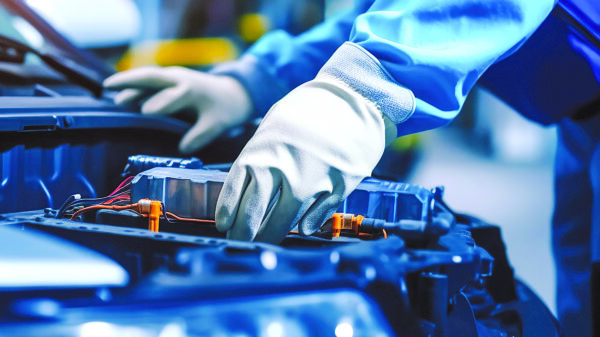
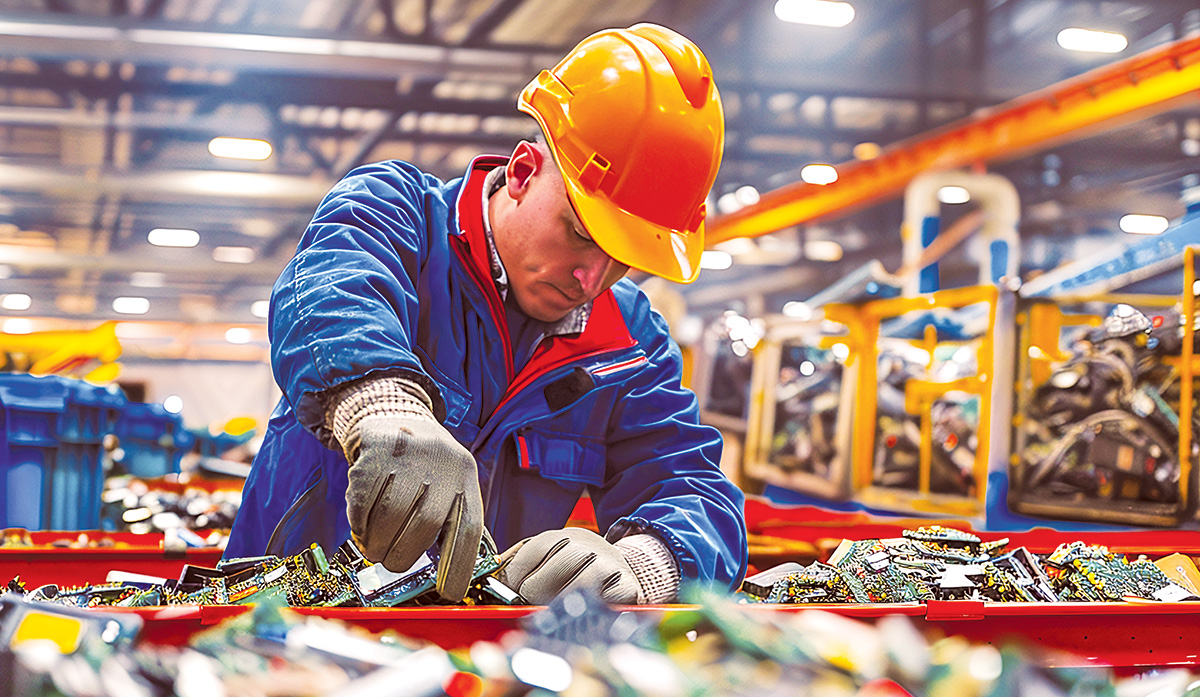
As the focus shifts toward resource recovery, e-waste recyclers are investing in technologies capable of extracting valuable materials from increasingly complex devices. Electronic products today are highly engineered, with materials often embedded in intricate configurations that make recovery challenging.
“Recycling technologies are becoming increasingly targeted and selective to recover high-value metals from complex electronics,” Upadhyay said. Mechanical separation techniques such as shredding and sieving are used to concentrate metals, while advanced methods take recovery further.
“Hydrometallurgical methods, including acid and bio-leaching, can selectively extract metals such as cobalt and indium, with recovery rates exceeding 90 percent in laboratory studies,” she said. Pyrometallurgy is also being adapted with pre-concentration steps to capture rare elements, while AI-assisted sorting systems improve material purity.
Spalding emphasized that battery recycling technologies are evolving rapidly to meet industry needs. “Technological advancements are focused on improving efficiency to recover valuable materials like lithium, nickel and cobalt,” she said. “Companies are looking for high-quality battery-grade metals to make new batteries, and that is driving innovation.”
Upadhyay’s own research explores emerging approaches that go beyond traditional methods. “We are looking at biogenic approaches, using plants to accumulate metals and convert them into high-performance materials,” she said. “This combination of advanced engineering, AI and biogenic recovery is transforming electronic recycling into a precision-driven resource supply chain.”
The Challenge of Trace Materials
Despite these advances, recovering critical materials presents unique challenges compared to traditional metals. Unlike copper or steel, which are present in relatively high concentrations and are easier to extract, critical elements are often dispersed in trace amounts throughout electronic devices.
“These materials are typically present at only 0.01 to 0.5 percent by weight,” Upadhyay said. “They are embedded in plastics, ceramics or coatings, making mechanical recovery challenging.”
The complexity of devices adds another layer of difficulty. Shredding can result in the loss of tiny particles, while chemical extraction introduces additional costs and safety considerations. “Successful recovery requires not just removing the metal, but doing so safely, efficiently and profitably,” she said.
Battery recycling presents its own set of challenges. “There are varying cathode chemistries in lithium-ion batteries, compared to a traditional lead-acid battery,” Spalding explained. “The safe handling of these devices throughout the recycling process is crucial.”
Proper packaging, transportation and processing are essential to mitigate risks, particularly as damaged or defective batteries enter the waste stream. “The processing of lithium-ion requires more advanced technologies than previous battery chemistries,” she said.
And while recovery can be complex, the value of critical materials is reshaping the economics of electronic recycling. Many of these elements command high market prices due to limited supply and growing demand.
“The high market value of critical metals such as cobalt, indium and rare earths can significantly offset the costs of collection, sorting and processing,” Upadhyay said. She noted that indium prices alone highlight the opportunity, with refined indium reaching hundreds of thousands of dollars per ton.
Spalding pointed to the broader economic potential of e-waste. “The United Nations projects e-waste to rise to $82 billion worth of metals by 2030,” she said. “There is tremendous value in used electronics that often gets mistakenly thrown away.”
This shift is also influencing investment trends. “Battery recycling is a key piece to enhancing our critical mineral supply chains,” Spalding said. “It’s a main driver for new investments and an expanding domestic industrial base.”
Beyond direct financial returns, e-waste recycling offers cost and environmental advantages over primary mining. Upadhyay noted that recovering metals from secondary sources can reduce both processing costs and environmental impact, supporting a more sustainable supply chain.
Targeting High-Value Streams
Of course, not all e-waste is created equal when it comes to material recovery. Certain products contain higher concentrations of critical elements, making them priority targets for recyclers.
“Lithium-ion batteries from electric vehicles, laptops and mobile devices are particularly high in cobalt, nickel and lithium,” Upadhyay said. LCD screens and LED devices are key sources of indium, while hard drives, magnets and speakers often contain rare earth elements such as neodymium and dysprosium.
Spalding emphasized the importance of capturing all battery types. “End-of-life batteries, even those that are damaged, defective or recalled, can contain valuable materials that can be reused,” she said.
To access these materials, recyclers are expanding collection networks and partnerships. “Through expanded collection programs, recyclers are working with manufacturers on extended producer responsibility compliance, retail and municipal collections and environmental services,” she said.
Indeed, the shift toward recovering critical materials is reshaping relationships across the electronics ecosystem. Recyclers, manufacturers and technology companies are increasingly working together to create more integrated, circular supply chains.
“Manufacturers and technology companies are partnering with recyclers to secure a reliable and sustainable supply of high-value metals,” Upadhyay said. Take-back programs, retailer drop-offs and mail-in recycling initiatives are helping companies reclaim materials from used devices.
These partnerships are also influencing product design. “Devices are being engineered for easier disassembly, modularity and recyclability,” she said, improving the recovery of critical elements.
Spalding highlighted similar trends, noting that collaboration is being driven by the need to secure stable, domestic sources of materials. “This strategic focus is creating closer collaboration across recyclers, manufacturers and technology companies to effectively manage the full lifecycle of electronic devices,” she said.
The push toward closed-loop systems is a key driver. By recovering and reusing materials, companies can reduce reliance on mining while improving supply chain resilience and meeting sustainability goals.
The Future of E-Scrap
As demand for electronics, batteries and renewable technologies continues to grow, the role of electronic recycling is expected to expand significantly. What was once viewed primarily as waste management is now becoming an essential component of global resource strategy.
“Electronic recycling is a core part of the global supply chain,” Spalding said. “As usage increases, so will the need for critical minerals, with recycling being an important contributor to securing these materials domestically.”
Upadhyay sees continued innovation as critical to meeting this demand. “A well-designed, multi-step strategy that integrates mechanical, chemical and emerging methods will be essential for effectively managing critical and rare elements,” she said.
Ultimately, the industry’s evolution reflects a broader shift in how materials are valued. E-scrap is no longer just a liability to be managed – it is a resource to be mined, refined and reintegrated into the economy.
by MAURA KELLER
mkeller@americanrecycler.com
Published May 2026