




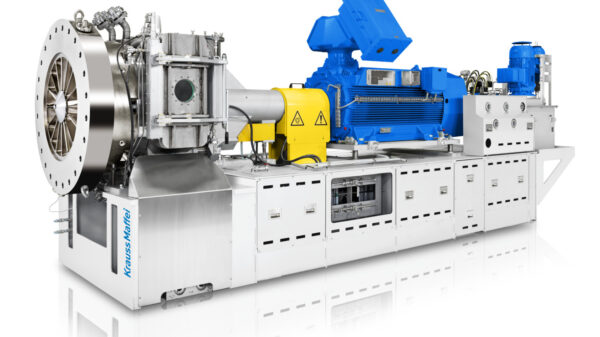







 Tozero has launched its first industrial demonstration plant in Germany. This facility is capable of turning end-of-life batteries into domestic supplies of lithium, graphite and a nickel-cobalt mix at scale for the first time.
Located in Bavaria at Chemical Park Gendorf, the plant was established in a record six months and can process more than 1,500t of battery waste every year. From this waste, Tozero can produce high-purity lithium carbonate – the equivalent of saving 6,000 electric vehicles’ worth of batteries from landfill – and recover graphite and nickel-cobalt mix at industrial scale. Thanks to Tozero’s proprietary acid-free, hydrometallurgical process, this recycling takes place in a single, superior cycle and the recovered materials are fed directly back into manufacturing.
Tozero has already demonstrated successful qualification of its recycled lithium and graphite for lithium-ion batteries with leading cathode and anode manufacturers. Building on this, the company aims to close the battery materials loop and support Europe’s ambition to achieve greater independence in critical raw materials. This aligns with the EU Critical Raw Materials Act, which calls for 25 percent of supply to come from recycling sources.
Tozero finally gives Europe a domestic source of critical materials – freeing it from its overwhelming dependence on Chinese imports. The facility will be used to deliver recycled lithium and graphite to companies across sectors including construction, ceramics, and lubricants.
“Europe doesn’t yet have the critical raw materials it needs to build and scale its own energy transition and battery industry,” said Sarah Fleischer, co-founder and chief executive officer of Tozero. “Our technology changes this by enabling us to recycle end-of-life batteries and extract these materials at industrial scale for the first time.
Following its success, the industrial demo plant will now form the blueprint for a full-scale commercial operation planned for 2030, capable of producing thousands of tonnes of lithium carbonate and graphite. It also forms a blueprint for Europe’s ability to secure a sustainable and independent supply of the critical raw materials its growing battery industry needs.
Global demand for lithium is set to quadruple by 2030, while in the EU alone, graphite demand is expected to rise by up to 25 times by 2040, driven by EVs, grid-scale storage and industrial electrification. Yet Europe remains almost entirely reliant on imports – China controls global graphite supplies, and 99 percent of Europe’s lithium comes from abroad. Ironically, Europe is sitting on a stockpile of the very materials it’s scrambling to source in the growing number of end-of-life batteries, largely from Europe’s growth in EVs, across the continent. It hasn’t been possible to recover them effectively until now.
The projected exponential growth in material demand is expected to result in a global supply gap exceeding 33 percent from 2035 onward. As a result, battery recycling will become essential, emerging as a key alternative source of critical raw materials. Leveraging its breakthrough recycling process, Tozero enables this transition without a “green premium,” instead delivering a “green discount.” Positioned as a “miner of tomorrow,” Tozero is on an accelerated path to help bridge the critical raw material supply gap sustainably.
Published May 2026