


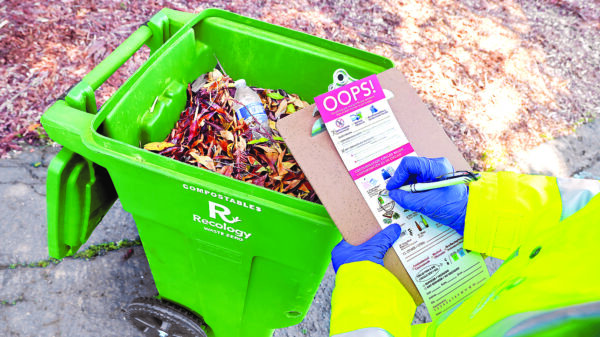


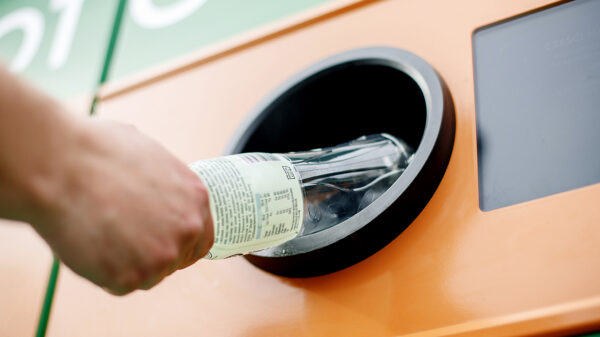
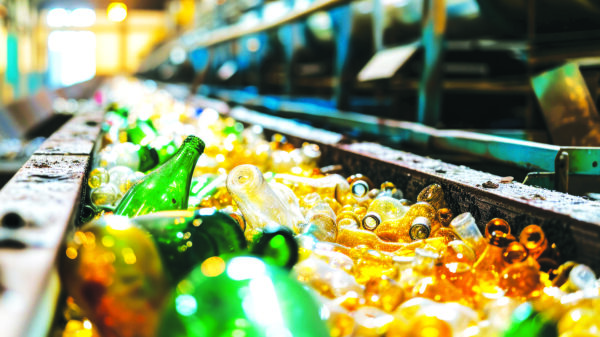
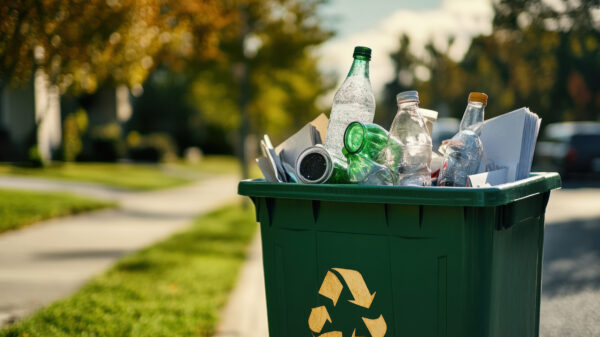



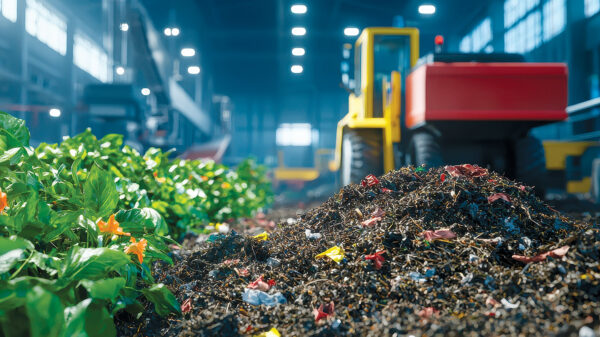
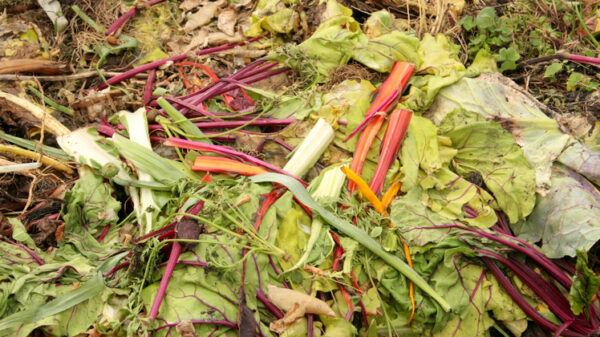

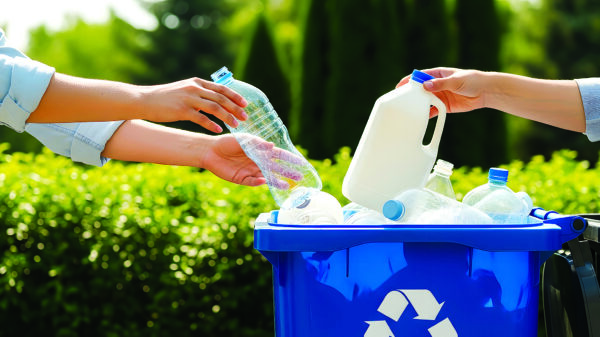



Recycling and other diversion strategies like composting are improving landfill rates by reducing the volume of waste being sent to landfills. According to the EPA, the amount of municipal solid waste going to landfills has dropped in certain areas of the U.S., thanks in part, to the efforts of certain states and cities. For example, San Francisco recently achieved an 80 percent waste diversion rate by implementing comprehensive recycling and composting programs. In addition, Minnesota reached its highest combined recycling rate in 2023 at 45.3 percent.
According Tim Stuart, chief executive officer of AMP, the waste and recycling industry has long sought solutions to increasing landfill diversion. However, outside of a few progressive states with streamlined recycling efforts, recycling rates have plateaued over the last decade and a half.
“But advancements in sorting that allow for the separation of commodities and organic material directly from the municipal solid waste (MSW) we produce can change the trajectory of recycling rates,” Stuart said. “Extracting material very close to where it’s generated produces significant transportation savings; it also allows access to the entirety of the material stream, not just what people place in their recycling bins. In addition to helping extend the life of landfills, MSW diversion enabled by AI-powered solutions reduces their environmental impact and keeps disposal costs low.”
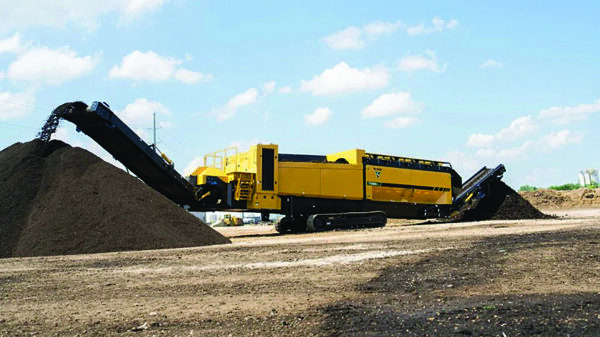
AMP has been operating an MSW processing system in Portsmouth, Virginia, since late 2023, extracting mixed recyclables and organic material directly from bagged trash. This highly efficient system runs approximately 25 tons per hour with 96 percent uptime – an unprecedented level of reliability with a footprint that wasn’t previously feasible, economically. Equipped with this system, the Portsmouth transfer station, where it is operating, is capable of diverting more than 60 percent of landfill-bound material for further processing with organic management and mixed recyclables sorting systems.
“Food scraps, yard waste and wood that breaks down in landfills creates methane, a greenhouse gas that’s more than 25 times more potent than carbon dioxide. Landfills today produce more than 17 percent of all fugitive U.S. methane emissions, a figure that many predict is underestimated by as much as 50 percent,” Stuart said. “Organics make up the majority of what we dispose of; we cannot maximize our resources and extend the life of our landfills without finding an alternative use for these materials.”
With AMP’s ability to directly mine MSW, or bagged trash, the company can tap into the significant balance of commodities, from reusable plastics to processable organic materials.
“We offer offtake solutions for organics, including biochar systems that convert a wide range of organic inputs into carbon-negative materials,” Stuart commented. “Biochar supports landfill management, carbon sequestration and sustainable construction materials.”
Captjur is a business consulting and technology firm that created and launched a gig economy platform for junk removal called JunkGrab. According to Bob Bilbruck, chief executive officer at Captjur, JunkGrab has taken extra steps in its processes to make sure that anything that can be recycled is separated and recycled out of all pickups.
“This leads to less landfill usage and also a much healthier and cleaner environment. It also gives many materials that used to go into landfills a second life, which is much more cost effective than throwing them away and wasting those materials,” Bilbruck said.
The areas most affected are large cities that are highly populated.
“These well populated areas tend to create more waste volume due to population in these areas and also these areas seem to have less areas for waste disposal because the land is much more valuable – that is why you see many haulers ship this waste to other states that can help handle the over flow,” Bilbruck said.
Off-shoring of waste and junk removal is a popular way to reduce local landfill volumes – especially in states that don’t have the landfill space, or land is too expensive in those states to extend existing landfills.
Ongoing landfill capacity concerns
Chief executive officer, Bland Warren, chief executive officer at PlasticFusion, a company that installs liner systems for new landfill cells and expansions, says the amount of installations being done is a clear sign that landfill operators are working aggressively to manage remaining capacity and stay compliant with state regulations.
“Landfill capacity isn’t just a technical or environmental issue; it’s a policy and public awareness challenge,” Warren said. “While technologies exist to reduce landfill dependence, their success hinges on legislation, funding and community support. Addressing landfill space requires a multi-pronged approach that combines innovation, infrastructure, behavioral change and policy reform. The sooner these strategies are embraced nationally, the more manageable the long-term waste crisis will be.”
Recycling significantly reduces landfill bound waste, particularly for materials like cardboard, paper, aluminum and certain plastics. “By diverting recyclables, municipalities and businesses reduce the volume and mass of waste needing disposal,” Warren said. “However, while these expansions provide short-term relief, the long-term trend indicates a shrinking number of viable landfill sites nationwide.”
As Warren explained, over the past decade, landfill space is becoming scarce in many regions, especially in the Northeast and the West Coast. Ten years ago, the concern over landfill shortages was growing, but today it’s much more urgent.
“Several states have already closed older landfills or restricted intake to prolong remaining capacity. Meanwhile, waste generation per capita has remained high, putting more pressure on existing sites,” Warren said. “In addition, recycling rates vary widely. States like California, Oregon and Massachusetts have more aggressive and effective recycling programs due to stronger policy support, infrastructure investment and public participation. In contrast, some southern and rural areas have lower recycling rates due to limited infrastructure or funding.”
To offset these concerns, Warren pointed to several complementary strategies being implemented:
- Waste-to-energy (WTE) facilities convert trash into usable energy, reducing landfill volume.
- Composting programs divert organic waste away from landfills, particularly food and yard debris.
- Landfill mining and repurposing of old sites for energy or space recovery
- Zero waste initiatives and producer responsibility laws shift the burden of packaging and end-of-life materials to manufacturers.
- Advanced sorting and materials recovery facilities (MRFs) that pull recyclables and organics out of the waste stream before landfilling
Looking ahead
Bilbruck believes that landfill space is going to get more expensive and waste management will, in turn, get more expensive.
“This will drive goals toward 100 percent recycling of all waste items and innovative technologies and companies will emerge to help with these challenges,” Bilbruck said. “This is a growth vertical that technologies like AI and other emerging technologies will continue to aid current market and business models.”
Stuart pointed out that innovative sortation can drastically improve recycling rates and create a new model for recycling – one that makes recycling not only possible, but safe and cost-effective, even where consumers may lack curbside access.
“Improvements in technology can solve not only technical but systemic problems, like issues around multifamily recycling, access in low population or rural areas and more. This allows us to rethink core challenges and make these programs durable rather than dependent on municipal, state, or other subsidies,” Stuart said. “This all amounts to more material reuse and diversion rates that create more landfill airspace.”
Warren believes the future of landfill space in the U.S. is becoming increasingly constrained, particularly in densely populated or heavily regulated regions. Without major policy shifts and infrastructure investments, many areas are expected to face capacity shortages within the next 10 to 20 years.
“To address this, future efforts must prioritize expanding waste diversion programs, such as recycling and composting, to reduce the volume of material entering landfills. Investment in waste-to-energy (WTE) and anaerobic digestion facilities will also be critical in sustainably managing organic waste,” Warren said.
Stronger regulations and producer responsibility laws are needed to reduce excessive packaging and improve material recovery. Warren said that at the same time, public education must be enhanced to boost participation in recycling programs and reduce contamination in the waste stream.
“Additionally, developing new landfill sites will require more advanced environmental safeguards, further increasing disposal costs, complexity and permitting challenges,” Warren said. “Proactive planning and innovation will be essential to ensure long-term waste management stability.”
by MAURA KELLER
mkeller@americanrecycler.com
Published October 2025