








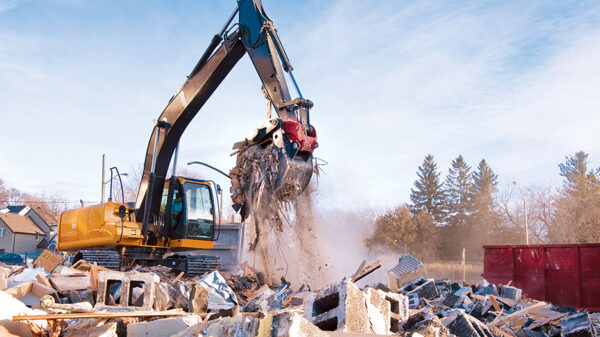














 As construction and demolition (C&D) recycling continues to evolve, investment in infrastructure, advances in processing technology and the development of new end markets are helping make material recovery increasingly viable across the country. At the same time, recyclers, contractors, equipment manufacturers and other industry stakeholders are working to address persistent challenges, from geographic gaps in processing capacity to contamination and the need for reliable markets for recovered materials.
In this Q&A, Andrea Johnson, executive director of the Construction & Demolition Recycling Association (CDRA), discusses the progress being made across the industry and the factors driving that change. Johnson addresses everything from mixed-load sorting and facility certification to shingle recycling, emerging end markets and the role of data in demonstrating recovery performance, while also looking ahead to what the next 5 to 10 years could bring for C&D diversion and recycling.
American Recycler (AR): What are some of the most encouraging advancements you’ve seen in C&D recycling?
Andrea Johnson: One of the most encouraging shifts I’ve seen is the scale of investment coming from across the waste industry, landfill operators, haulers and independent operators. Landfill operators are putting real capital into recycling infrastructure, often because they want to conserve airspace and protect the long-term value of their sites. A landfill cell is a finite, expensive asset, so operators who once treated C&D material as straightforward tonnage to bury waste are increasingly looking at it as a resource to divert and monetize instead. At the same time, rising landfill disposal costs are changing the calculation for haulers and independent operators who don’t own landfill capacity themselves. Diverting material to recycling or opening and operating their own facilities has become a more attractive option financially, not just an environmentally motivated one. Layered on top of that is growing demand from customers and contractors who want to see sustainable practices built into their projects, including recovering and recycling as much material as possible off the jobsite. That demand is starting to shape how haulers and operators position themselves competitively. Recovery and recycling used to be treated as a side operation, almost an afterthought to the core business of disposal. Now, across landfill operators, haulers, and independent recyclers alike, it’s increasingly seen as core to staying competitive and meeting where the market and the customer base are headed.
AR: Mixed loads are a standard part of the C&D recycling process. How are today’s sorting and processing technologies improving recovery from mixed C&D loads?
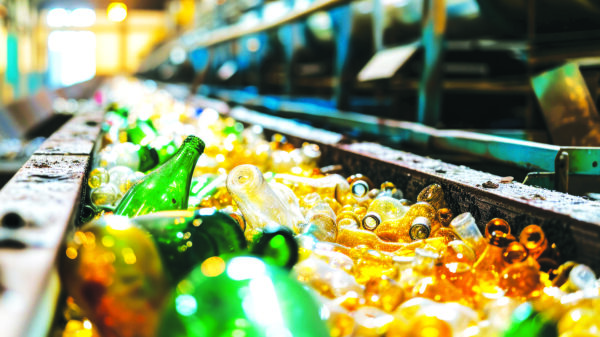
Johnson: Mixed loads coming off a jobsite are the norm, not the exception, and the industry has built its technology and its processes around that reality rather than relying on source separation to happen consistently in the field. Modern facilities combine mechanical processes like screens, trommels and magnets with optical sorting, along with manual sorting for the materials that automated systems can’t reliably distinguish. Not every facility relies on this level of automation, though. A meaningful share of the industry still sorts effectively using well-trained staff and methodologies like cart-based separation, where workers sort material into carts as an integral part of their sorting process. Done well, that approach can recover a comparable range of material to a more automated facility, and it reflects the fact that staff training is just as much a driver of recovery performance as the equipment on the floor.
AR: Some recycling facilities are achieving recycling rates of more than 70 percent on mixed loads. What technologies and practices are enabling facilities to achieve recovery rates that high?
Johnson: Facilities reaching those recovery rates tend to combine several things well rather than relying on any single piece of equipment. That includes pre-sorting to pull out large or hazardous items early, multi-stage mechanical separation, optical and sensor-based sorting for finer material streams, and, just as importantly, well-trained staff doing hand sorting where automated systems fall short.
A facility doesn’t need to be fully automated to hit strong recovery numbers. Some of the best-performing operations lean heavily on experienced staff who know the material streams well enough to catch what a sensor or screen alone would miss. It also depends heavily on facility layout and process design. The best-performing operations tend to think through the full path a load takes from tip floor to final bunker, minimizing the number of times material has to be handled and designing the line so each stage builds cleanly on the one before it.
Just as important is having reliable end markets lined up for each material stream before the material is even recovered. Recovery technology only matters if there’s somewhere for the material to go, so the strongest operators invest as much in market relationships, contracts with paper mills, aggregate buyers and scrap processors, as they do in equipment.
A facility’s recovery rate is only as good as the recyclability of the material coming off the jobsite. If contractors are using building materials that simply aren’t recyclable, whether due to composition, contamination, or a lack of any viable end market, the facility has no real choice but to send that material to landfill regardless of how sophisticated its sorting process is. High recovery rates aren’t purely a function of facility performance. They also reflect the materials and product choices being made upstream, which is part of why contractor and manufacturer decisions matter just as much as what happens on the sorting line.
AR: What role does independent certification play in demonstrating facility performance?
Johnson: This one matters a great deal to me. A facility that pursues certification through the Recycling Certification Institute (RCI) opens itself up to a full third-party audit, including a review of scale data across a minimum of twelve months. If any reported number varies by more than 5 percent, the facility doesn’t receive certification. That’s a meaningfully tight standard, and it means certified facilities are reporting numbers that have actually been tested against their own operational records, not estimates rounded in a favorable direction. RCI also verifies claims directly with end markets. If a facility reports shipping 100 bales of cardboard to a paper mill, RCI will contact that mill and confirm the amount actually received.
What certification really represents, though, goes beyond any single audit. A facility willing to go through this process is agreeing to be audited on a continual, ongoing basis, not just once. That willingness to stand behind their numbers year after year is what actually builds confidence, both with consumers and with the general public who want to know that the recycling claims attached to their project are real. It carries real weight for LEED projects as well, where verified recycling data supports credits and documentation. But I’d argue the consumer confidence piece is just as important as the LEED benefit, if not more so. It gives the industry as a whole a credible answer when our recycling rate claims get questioned, which they sometimes are given how commingled our incoming material streams tend to be, and it gives everyday consumers a reason to trust that the recycling happening behind the scenes on their project is genuine.
AR: Looking ahead, what excites you most about the future of C&D recycling?
Johnson: What excites me most is watching an industry that used to operate in the background start to gain a real policy voice. Over the next 5 to 10 years, I expect to see continued movement on extended producer responsibility legislation, more consistent battery fire safety standards as electrification changes what shows up in the waste stream, and stronger DOT-level specifications that make recycled materials like RAS a standard input rather than an exception. I also expect to see growth in end markets we’re only starting to develop today, particularly around gypsum and other materials where the recovered product is still working to earn the same level of confidence that recycled aggregate or scrap metal already commands.
A lot of that progress will come down to continued investment, and specifically to better data reporting that helps facilities, contractors, and end markets make decisions based on real numbers rather than assumptions. The industry has gotten much better at capturing this data, but there’s still room to grow, and I think the facilities that invest in strong reporting now will be the ones best positioned to demonstrate their value over the next decade. I also expect to see continued investment in recycling infrastructure nationwide, closing some of the geographic gaps that still leave certain markets without a viable processing facility within a reasonable haul distance.
None of that happens in isolation from policy, though. A meaningful part of the work ahead involves better educating lawmakers and working directly with them to understand how our industry can support the sustainability goals they’ve already set for their states and communities, while also bringing real economic benefit through jobs, investment, and reduced landfill dependence. When lawmakers understand C&D recycling as an economic development tool as much as an environmental one, the policy conversation tends to shift in the industry’s favor. If the industry keeps building the kind of verified, defensible data that regulators and end markets need to trust, while also doing the work to bring lawmakers along as genuine partners, I think diversion rates climb meaningfully over that window and recovered C&D materials stop being treated as a lesser substitute and start being treated as a preferred input.
by MAURA KELLER
mkeller@americanrecycler.com
Published September 2026