






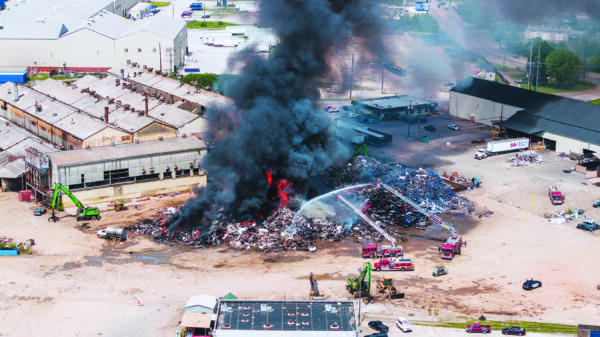









 Cleveland-Cliffs and the Department of Energy announced plans to continue the use of coal at Cleveland-Cliffs’ Middletown Works steel mill, abandoning previously announced plans to transition toward clean energy. The company was originally selected in March 2024 for up to $500 million from the U.S. Department of Energy (DOE) to replace Middletownʼs coal-fired blast furnace with a 2.5-million-tonne hydrogen-ready Direct Reduced Iron (DRI) plant and two electric melting furnaces.
Announcing that award in 2024, Cleveland-Cliffs said the project would make Middletown “the most advanced, lowest GHG-emitting integrated iron and steel facility in the world,” securing 2,500 union jobs, adding 170 permanent positions, and creating 1,200 construction jobs, while cutting production costs by $150 per net ton of liquid steel, which the company valued at $450 million in annual savings.
The Department of Energy’s Industrial Demonstrations Program was established specifically to solicit “first- or early-of-a-kind” technologies capable of spearheading American industrial decarbonization. Selected from over 400 competitive applicants, Middletown Works was a centerpiece of that effort, the nationʼs first demonstration of a unionized, coal-based integrated mill modernizing to cleaner steelmaking.
Elena Saxonhouse, managing attorney with Sierra Club said, “Cleveland Cliffs is recklessly going back on its word when it promised, back in 2024, to reduce air pollution in the Middleton community by using federal investments in the newest cleanest steel making technology. Instead, Cleveland Cliffs is doubling down on pollution with older-generation, coal-based production. In allowing this about-face, DOE is redirecting half a billion taxpayer dollars away from Congressʼs intended purpose. Using this massive amount of money to reinvest in out-of-date production methods proven to cause harm to people and the environment is bad business and bad policy.”
The revised project abandons that vision. The company is currently seeking a permit to install what the new plan calls an “advanced” natural gas cogeneration plant, an otherwise standard efficiency technology that burns blast furnace gas to raise steam and generate electricity. Cleveland-Cliffs already operates this technology at its other blast furnace operations, Cleveland Works, Burns Harbor, Indiana Harbor, and Dearborn Works.
Published October 2026